


Managed Print Services in University City

January 20, 2026
 0 views
 0 comments

Managed Print Services in University City: Cut Printing Costs, Tighten Security, and Keep Devices Running
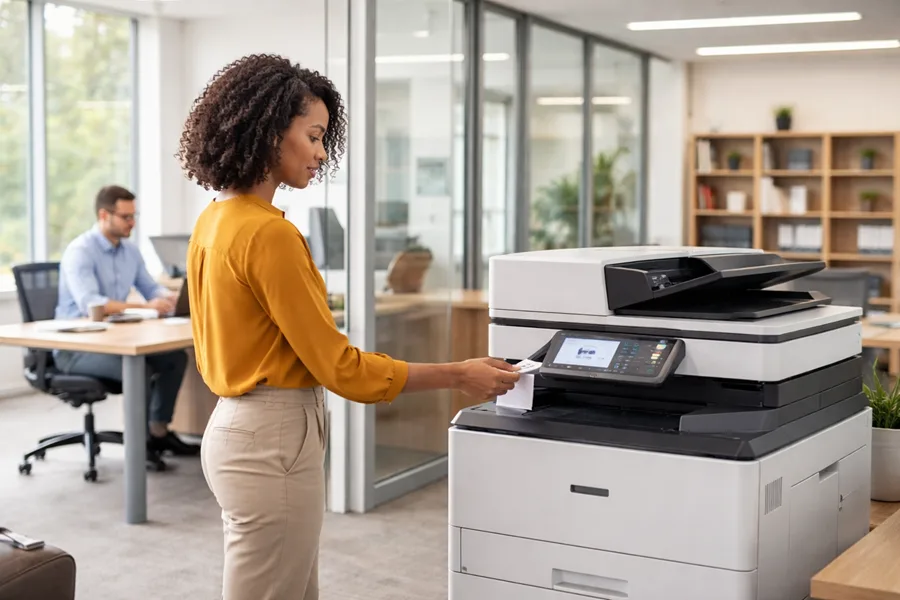
Managed Print Services (MPS) centralize device management, supplies fulfillment, security controls, and usage analytics so organizations spend less on supplies and downtime. This guide explains what MPS looks like in practice, why businesses and campus units in University City benefit from targeted print management, and how a local provider delivers measurable savings and stronger document security. Many University City offices juggle mixed fleets, visitor printing, and compliance demands—issues that make unmanaged printing costly and risky.
A structured MPS program fixes those problems through assessment, consolidation, and continuous monitoring. Read on for a clear definition of MPS, practical ways it improves efficiency across West Philadelphia workplaces, the primary business benefits (cost, productivity, security, sustainability), and a straightforward path to implementation with Associated Imaging Solutions. The guide closes with answers to common questions about contracts, expected savings, leasing versus buying, and steps to request an assessment or start a pilot.
Managed Print Services: Reduce Costs, Improve Security, Increase Uptime
Managed Print Services coordinate device management, supplies fulfillment, security controls, and analytics so organizations lower costs and avoid avoidable downtime. This guide covers what MPS is, why University City organizations need focused print management, and how a nearby provider can deliver clear savings and better document protection. Local challenges—mixed fleets, transient users, and compliance pressures—are addressed through assessment, consolidation, and ongoing oversight.
Managed Print Solutions
What Are Managed Print Services and Why Do University City Businesses Need Them?
Managed Print Services (MPS) is a coordinated program that inventories printers and copiers, optimizes device placement and settings, handles consumables, and provides ongoing maintenance and reporting to lower total cost of ownership and increase uptime. MPS combines device consolidation, automated supplies, and secure print workflows so teams spend less time fixing printers and more time on their work. University City benefits from MPS because the neighborhood includes research labs, startups, university departments, and small businesses with high visitor printing and varying security needs. Those mixed environments create unpredictable costs and higher risk of data exposure—issues MPS addresses with standardized devices, per-page pricing, and secure release workflows.
Many University City organizations gain value from a local provider that can perform on-site assessments and respond quickly to service requests. Associated Imaging Solutions serves the Philadelphia area and lists Managed Print Services among its core offerings, combining local responsiveness with partner-brand hardware and flexible leasing. That local presence matters when fast on-site support, technician dispatch, or customized leasing terms are required for campus-adjacent operations.
How Does Managed Print Services Improve Office Print Optimization in University City?
MPS improves print efficiency by consolidating devices, standardizing settings, and using analytics to route jobs to the most cost-effective machines. Consolidation cuts redundant or aging printers, while rules-based routing and print policies reduce cost-per-page and paper waste. For example, routing high-volume jobs to a low-cost network MFP lowers per-page expense and frees up desktop printers for occasional needs. Analytics dashboards show toner use and print patterns, enabling proactive supply replenishment and lifecycle planning. Together, these changes reduce emergency service calls and create predictable monthly billing—helpful for tight budgets in small and mid-sized University City organizations.
Those optimization steps lead naturally into identifying local printing pain points, which guides the assessment phase of any MPS program.
What Unique Printing Challenges Do University City Businesses Face?
University City has specific printing challenges driven by high visitor traffic, a mix of organizational types, and strict research or legal compliance needs. Transient populations—students, visiting scholars, vendors, and conference attendees—create unpredictable print spikes that strain toner supplies and create queues at shared devices. Research and legal offices often require audit trails and secure release to protect confidential material. Public-facing services need reliable receipt and label printing that integrates with other systems. Those varied needs often produce mixed fleets, inconsistent policies, and a reactive service approach.
Addressing these issues requires a tailored MPS plan: an audit to map devices and usage, policy controls for guest printing, secure authentication for sensitive jobs, and local service capacity to restore critical devices fast. Recognizing these local constraints helps organizations move from discovery to targeted fixes.
What Are the Key Benefits of Managed Print Services for University City Businesses?
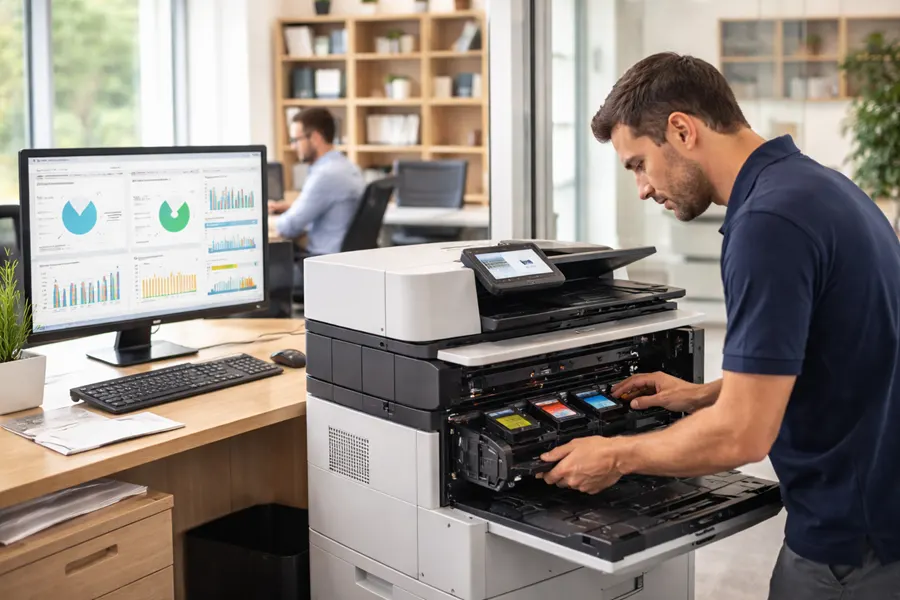
MPS delivers measurable benefits: lower costs, higher productivity, stronger document security, and better sustainability performance through operational changes and ongoing governance. Delivered via price-per-impression models, proactive support, secure workflows, and scheduled equipment refreshes, these actions reduce waste and add predictability. Because benefits touch financial, operational, and environmental areas, University City organizations can align printing practices with budgets, compliance, and campus sustainability goals. Below is a practical comparison of benefit categories, how they’re delivered, and typical KPI improvements you can expect.
This table shows how core benefits map to practical MPS actions and expected results. The sections that follow unpack financial, operational, security, and sustainability impacts in more detail.
How Can MPS Deliver Significant Cost Reduction and Budget Predictability?
MPS lowers costs through fleet rationalization, volume-based pricing, and lifecycle planning that turn unpredictable expenses into steady monthly billing. Price-per-impression or managed-supply contracts eliminate ad-hoc toner purchases and help ensure devices fit actual usage. For example, an office paying varied vendor rates for toner and emergency repairs can move to consolidated per-page invoicing, reducing hidden premiums and enabling accurate forecasting. Savings depend on current device age, diversity, and contract terms, but many organizations see double-digit reductions in print spend.
Those savings also improve budget predictability and free finance teams to focus on core priorities. Next, consider how operational efficiency compounds those savings through less downtime and faster support.
How Does MPS Enhance Efficiency and Productivity in West Philadelphia Offices?
MPS boosts productivity by cutting user interruptions, centralizing helpdesk support, and using remote monitoring to prevent failures. Monitoring flags errors, low toner, and performance issues so supplies or technicians arrive before users are impacted. Centralized policies and job routing reduce time employees spend finding a working device or troubleshooting prints. For knowledge workers and lab staff in University City, this means fewer workflow disruptions during critical tasks and meetings, measurable reductions in downtime, and higher satisfaction with printing services.
Reliable devices also make it easier to roll out security controls—like authentication and secure release—without harming user experience, which we discuss next.
What Document Security Features Does MPS Provide for University City Businesses?
MPS adds document security through secure print release, user authentication, encrypted job transmission, and audit logging to reduce unauthorized access and support compliance. Secure release requires users to authenticate at the device before printing, preventing sensitive documents from sitting unattended. Encryption protects print data in transit, and centralized logs create an auditable trail for compliance or incident review. These features are especially valuable for research labs, legal teams, and healthcare-adjacent organizations in University City that must safeguard sensitive information.
When security controls are paired with monitoring and policy enforcement, organizations reduce data-leak risk while maintaining productivity. The next benefit area ties print management to environmental goals.
How Does MPS Support Sustainable and Eco-Friendly Printing Practices?
MPS supports sustainability by setting duplex printing as the default, consolidating to energy-efficient devices, and running toner and hardware recycling programs to cut waste and lower carbon footprint. Policy changes—like default double-sided printing and print quotas—quickly reduce paper use. Fleet refreshes to Energy Star-rated multifunction printers lower energy consumption. Recycling and remanufacturing programs for consumables and parts reduce landfill contributions. These tactics align with institutional sustainability goals common to universities and research centers in University City.
Sustainability improvements often produce secondary savings on paper and energy and can be reported as part of an organization’s environmental metrics, supporting both budget and reputation goals.
How Does Associated Imaging Solutions Deliver Comprehensive Managed Print Services in University City?
Associated Imaging Solutions (AIS) delivers MPS through a clear process: assessment, custom design, deployment, and ongoing management—backed by Philadelphia-area responsiveness and flexible leasing and procurement. AIS combines local service with partner-brand hardware and financing options to meet University City needs. Their approach collects usage data, recommends a right-sized fleet, and provides ongoing monitoring, supplies management, and service support to keep operations predictable.
The table below summarizes AIS’s service phases, main activities, and the outcomes clients typically achieve.
This breakdown shows how AIS matches MPS phases to client deliverables and outcomes. The next sections describe assessment, design, and support in more detail.
What Is Included in the Initial Print Assessment and Analysis?
An initial assessment gathers a device inventory, measures usage by location and department, reviews cost-per-page, and finds security and workflow gaps to create a data-driven baseline for improvement. Technicians and tools log device models, volumes, and common job types to identify where consolidation or new policies yield immediate savings. The analysis also highlights exposure points like open network printing or devices without authentication. Deliverables include a baseline report with recommended placements, projected savings, and a phased implementation plan tailored to the organization’s size and rhythms.
Those findings guide the custom design phase so recommendations match real usage rather than assumptions.
How Are Tailored MPS Solutions Designed and Implemented for Local Businesses?
Designing a tailored MPS solution starts with stakeholder interviews, pilot deployments, and device-configuration workshops to align hardware and policies with real workflows. Sessions prioritize which teams need color or high-volume printing, where secure release is required, and how guest printing is handled in public areas. Pilots validate routing rules and authentication before a full rollout, minimizing disruption. Implementation typically follows pilot, phased deployment, and staff training so users adopt new workflows and administrators get the reporting they need.
This tailored design then flows into ongoing management practices that preserve gains while adapting to change.
What Ongoing Management and Support Services Does AIS Provide?
Ongoing management covers remote device monitoring, automated supply replenishment, helpdesk support, and local technician dispatch to keep uptime high and performance consistent. Monitoring detects error states and toner levels, prompting supplies or service before users are affected. Helpdesk and account management coordinate incident response, and local technicians handle on-site repairs and preventive maintenance under agreed service levels. Regular reports summarize usage, security events, and sustainability metrics so clients can verify savings and compliance.
Those continuous services maintain operational improvements and provide the predictable cost structure that finance and operations teams expect.
Why Choose Associated Imaging Solutions for Managed Print Services in University City?
Associated Imaging Solutions stands out for Philadelphia-based customer service, flexible leasing, access to modern multifunction printers, and a focus on eco-friendly, cost-effective outcomes that suit University City organizations. Local presence enables fast on-site support and quick technician response for campus-area clients, while OEM partnerships ensure reliable hardware and upgrade paths. AIS offers leasing and trade-in options for organizations that prefer predictable cashflow and regular equipment refreshes. These advantages reduce administrative load for IT and facilities teams while delivering measurable print-cost improvements.
The comparison below helps readers weigh AIS offerings against common alternatives.
This comparison highlights how a local, service-focused provider can offer faster response, financing flexibility, consistent technology, and sustainability planning.
What Local Expertise and Customer Service Does AIS Offer to University City Clients?
AIS provides hands-on, Philadelphia-area customer service with rapid response, local technician dispatch, and dedicated account management for University City clients. Local knowledge means technicians understand campus-adjacent building layouts, common user patterns, and the security needs of research and legal offices in the neighborhood. Account managers coordinate supply planning, reporting cadence, and periodic reviews to keep the MPS program aligned with changing needs. This local model shortens downtime and builds a collaborative relationship between the provider and internal IT or facilities teams.
Local responsiveness also helps when organizations need custom leasing terms or quick pilot adjustments.
Which State-of-the-Art Technologies and Leasing Options Are Available?
AIS offers modern multifunction printers and flexible leasing options that let organizations match device capability to actual needs while preserving cashflow and scheduling upgrades. Device classes include networked monochrome and color MFPs, high-volume production devices, and compact units for satellite offices—each chosen to balance performance and cost-per-page. Leasing enables staged upgrades and predictable operating budgets, useful for organizations planning capital cycles or scaling. These technology and financing mixes simplify lifecycle planning and reduce the burden of managing disparate hardware.
Whether to lease or buy depends on budget priorities and upgrade expectations; a provider can model both scenarios using baseline data.
What Do Philadelphia-Area Clients Say About AIS’s Managed Print Services?
Philadelphia-area clients report lower print costs, faster service response, and clearer visibility into usage trends after working with AIS. These outcomes support operational decisions and budget planning. Summarized client feedback shows that local support combined with a structured MPS approach delivers both quick wins and long-term cost control. Prospective clients are encouraged to request case studies that document measured savings and timelines for similar organizations. Reviewing anonymized results helps set realistic expectations for pilot and full-scale rollouts.
Client experience reinforces the value of pairing local responsiveness with systematic print management.
What Are the Most Common Questions About Managed Print Services in University City?
Organizations typically ask about contract terms, expected savings, and whether leasing or buying is the smarter choice. Clear answers help procurement and IT teams evaluate MPS offers and prepare for assessments that produce accurate proposals. The Q&A below addresses those common decision points in a quick-reference format.
What Does a Typical Managed Print Services Contract Include?
A typical MPS contract includes an initial assessment and baseline report, a description of supplied devices and placements, details on supplies and replenishment, maintenance and support terms, and a pricing model (per-page, bundled, or lease-based). Contracts also spell out service-level commitments, reporting frequency, and lease or renewal options. Security responsibilities—like secure release and encryption—should be documented to meet compliance needs. Contracts often include migration milestones for staged deployments and training deliverables to ensure adoption.
Knowing these components helps buyers compare proposals and ask targeted questions.
How Much Can University City Businesses Save with Managed Print Services?
Savings vary by fleet size, current inefficiencies, and policy changes, but many organizations see reductions in the range of 20–30% on overall print-related costs depending on the baseline. Factors that influence savings include fleet age and diversity, current spend on ad-hoc supplies and repairs, and the effectiveness of policy changes such as duplex defaults and print quotas. A tailored assessment is the only reliable way to estimate savings for a specific organization because usage and device mixes differ widely across University City.
Requesting an audit produces an evidence-based projection and highlights the highest-impact opportunities.
Managed Print Services: Risk-Aversion and B2B Contracting
Risk-aversion and B2B contracting under asymmetric information: Evidence from managed print services
Is Leasing or Buying Printers Better for University City Businesses?
Leasing versus buying depends on cashflow, upgrade needs, and maintenance capacity. Leasing usually provides predictable monthly costs and scheduled upgrades, while buying can be less expensive over the long term for steady, high-utilization environments. Leasing suits organizations that want to preserve capital, ensure regular refresh cycles, and simplify maintenance with bundled service. Purchasing may fit entities with consistent high-volume needs that prefer ownership and potentially lower lifetime costs. Smaller businesses and institutions with variable needs often choose leasing for its flexibility and lower administrative overhead.
A provider can model both options using baseline data to compare total cost of ownership and cashflow impacts.
How Can University City Businesses Get Started with Managed Print Services from AIS?
Getting started begins with requesting an assessment, gathering baseline information, and scheduling a discovery session to confirm goals and timelines. Associated Imaging Solutions performs local assessments to collect inventory and usage data, identify security gaps, and recommend device and financing options. The initial steps focus on data collection and prioritization so pilots can demonstrate value quickly. Below is a simple path organizations can follow to begin an engagement and move toward a managed program.
- Request an initial assessment and provide current device inventory and recent usage data.
- Review the baseline report and agree on priority improvements and pilot scope.
- Launch a pilot to validate routing, policies, and device performance.
- Approve full deployment, schedule staff training, and start ongoing monitoring and reporting.
This stepwise approach ensures transparency and measurable results at each stage, making it easier to justify the investment internally.
How Do You Request a Free Managed Print Services Assessment?
To request an assessment, have basic details ready: number and locations of current devices, recent print volumes by department (if available), and primary security or sustainability goals. The request typically confirms preferred visit times and any access constraints for onsite inventory. The assessment normally includes a short onsite visit plus automated usage collection over a brief window, followed by a baseline report with prioritized recommendations. Expect a clear timeline for the assessment and a follow-up presentation to review findings and next steps.
Preparing this information speeds the process and improves proposal accuracy.
What Are the Next Steps After the Initial Consultation?
After the consultation, the typical path is audit completion, proposal and approval, pilot deployment, staff training, and full rollout with ongoing monitoring and reporting. The audit yields a baseline report and a proposal that outlines device configuration, projected savings, and financing options. A short pilot validates assumptions and allows tuning of routing, security, and workflows. Following a successful pilot, the organization proceeds to staged rollout, trains users on secure-print practices, and establishes a reporting cadence to track savings, uptime, and sustainability gains.
These steps create a controlled path from insight to sustained operational improvement, aligning print management with your organization’s goals.
Frequently Asked Questions
What types of businesses can benefit from Managed Print Services in University City?
Managed Print Services help many University City organizations: research labs, academic departments, startups, small businesses, and public-facing services. Each faces unique printing needs—high visitor traffic, mixed device use, and compliance requirements. MPS streamlines printing, cuts costs, and improves security, making it a practical solution for any group seeking more predictable and manageable print operations.
How does MPS impact environmental sustainability for businesses?
MPS supports environmental goals through default duplex printing, energy-efficient devices, and recycling programs. Defaulting to double-sided printing and consolidating devices reduce paper waste. Providers often offer cartridge and hardware recycling to keep consumables out of landfills. These steps lower environmental impact and can also reduce consumable costs.
What are the key performance indicators (KPIs) to measure MPS success?
Use KPIs like cost savings, print-volume reduction, device uptime, and user satisfaction to measure MPS success. Track percent decrease in print costs, paper use, frequency of service calls, and user feedback. Regular reporting on these metrics shows whether the program meets financial, operational, and sustainability goals.
Can MPS be customized to fit specific organizational needs?
Yes. MPS is highly customizable. Providers start with an assessment to understand workflows, volumes, and security needs, then tailor device mixes, security controls, and policies. That alignment ensures the program supports each organization’s goals and maximizes efficiency and savings.
What role does technology play in enhancing MPS effectiveness?
Technology is central: analytics reveal usage and inefficiencies, secure print release and authentication protect documents, and remote monitoring prevents downtime. Modern MFPs and cloud tools give organizations flexibility, scalability, and better control over their printing environment—leading to improved performance and lower costs.
How can organizations ensure a smooth transition to MPS?
Start with a thorough assessment of devices, usage, and security needs. Involve stakeholders early, run a pilot to validate changes, and provide training and support for staff. These steps minimize disruption and help users adopt new workflows smoothly.
Related Posts
— Managed Print Services in Delaware Valley

— Managed Print Services for Philadelphia Businesses