

Managed Print Services in Wilmington, DE

December 25, 2025
 0 views
 0 comments
AI Overview:
This guide explains how Managed Print Services (MPS) help Wilmington, DE businesses reduce printing costs, improve uptime, strengthen document security, and support sustainability through centralized device management, analytics, and automation. It outlines how MPS delivers measurable savings (often 15–30%), enhances compliance with secure print controls, and simplifies IT workloads, while highlighting the role of a local provider like Associated Imaging Solutions in delivering assessments, tailored plans, and responsive support.
Managed Print Services in Wilmington, DE: Streamline Costs, Security, and Uptime
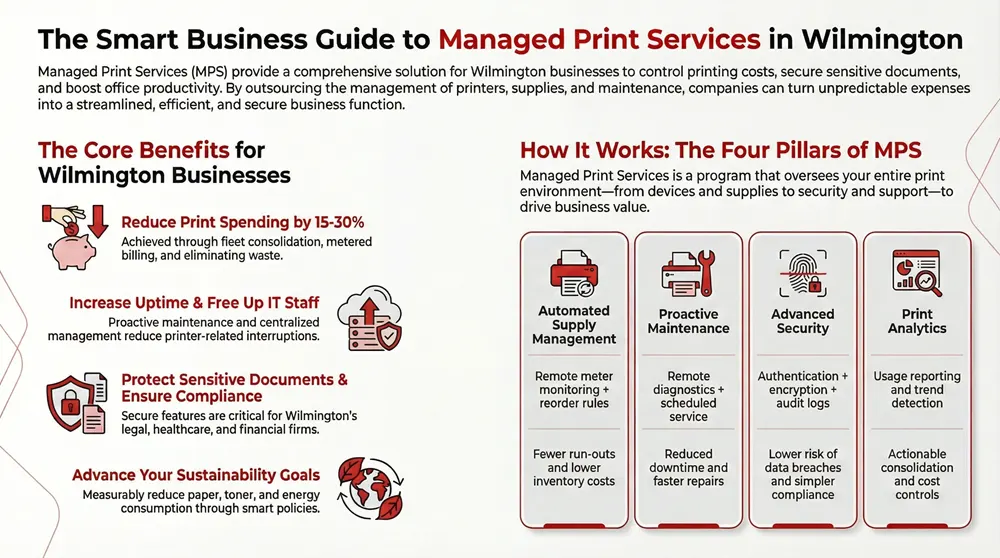
Managed Print Services (MPS) help Wilmington organizations lower printing costs, protect sensitive documents, and run more efficiently by centralizing device management, automating supplies, and enforcing sensible usage policies. This overview shows how MPS works for Wilmington businesses, the measurable benefits local companies see, the technical features that drive savings and security, and clear first steps to get started. You’ll learn which pain points MPS solves—rising consumable expenses, fragmented fleets, security gaps, and sustainability tracking—and what a modern MPS program includes, from automated supply replenishment to print analytics. We also show how a local provider like Associated Imaging Solutions supports Wilmington teams with assessments, tailored plans, and responsive service, plus answers to common 2024 questions about trends and ROI. Use this guide to understand the mechanics, the KPIs to watch, and the local delivery model that delivers measurable results for Wilmington-area operations.
Why Do Wilmington Businesses Need Managed Print Services?
Managed Print Services (MPS) is a coordinated way to manage printers, copiers, and document workflows that lowers costs and boosts reliability by consolidating devices, standardizing policies, and automating procurement and support. The key benefit is visibility: collecting device, usage, and supply data reveals inefficiencies and enables policies that cut cost‑per‑page and improve uptime. For Wilmington companies, that visibility delivers predictable print expenses, stronger document security for regulated sectors, and operational gains that free IT to focus on higher‑value projects. Those outcomes matter here because local businesses must control overhead and increasingly report on sustainability — MPS directly supports both priorities. Below are the main reasons Wilmington businesses adopt MPS and the measurable outcomes they target.
Wilmington organizations most often pursue MPS to achieve these concrete improvements:
- Lower overall print spend through fleet consolidation and metered billing.
- Less downtime thanks to proactive maintenance and service-level agreements that keep teams productive.
- Stronger document security by adding authentication and encrypted workflows.
- Better sustainability through reduced paper and energy use and recycling initiatives.
Those drivers lead naturally into how MPS cuts costs in practice for Wilmington firms and which operational efficiencies it unlocks next.
How Can MPS Reduce Printing Costs for Wilmington Companies?
MPS cuts printing costs by retiring underused machines, applying metered billing, and automating supplies so you purchase only what you need. Right‑sizing the fleet removes redundant multifunction units that drive lease and service fees, while centralized cost‑per‑page reporting highlights high‑cost departments for chargeback or policy changes. Automated supply management prevents emergency orders and trims inventory carrying costs, and flexible leasing options let organizations convert large capital expenses into predictable operating costs. Typical MPS projects can reduce print spend by roughly 15–30% depending on the starting environment, and many clients see ROI in months rather than years. Knowing these levers helps Wilmington teams evaluate proposals and forecast the financial impact of MPS.
What Efficiency Benefits Does MPS Offer for Wilmington Office Printers?
MPS raises efficiency by cutting user interruptions, simplifying workflows, and reducing IT workload through centralized management and remote diagnostics. SLAs and remote monitoring shorten mean time to repair because technicians get alerts early and can stage parts before a visit, minimizing employee downtime. Central policies — like default duplexing, black‑and‑white routing, and print quotas — nudge behavior and lower waste and administrative overhead. Those operational gains let staff stop handling routine printer issues and allow IT to focus on strategic priorities. The next section covers how MPS strengthens data security and compliance for sensitive documents.
How Does MPS Enhance Data Security for Wilmington Businesses?
MPS strengthens security by adding device authentication, secure print release, data encryption, and detailed audit logs that reduce the risk of unauthorized disclosure. Authentication ensures documents are released only to the right user, while encryption protects files in transit and at rest on device storage. Audit trails and reports make compliance easier by showing who printed what and when — a critical capability for legal, healthcare, and financial organizations in Delaware. Regular firmware updates and security reviews built into an MPS program also close vulnerabilities left by unmanaged printers. These controls often pair with sustainability goals in a coordinated program.
Why Is Sustainable Printing Important for Wilmington and Delaware Businesses?
Sustainable printing matters because environmental stewardship affects operating costs, stakeholder perception, and regulatory reporting — and MPS offers practical levers to reduce paper, toner, and energy consumption. Common measures include default duplexing, print quotas, digitization to lower paper workflows, choosing energy‑efficient devices, and toner recycling programs. Carbon and waste‑reduction metrics from MPS feed CSR reporting and demonstrate measurable progress to customers and regulators. These practices lower variable costs and bolster community reputation, creating a positive cycle between efficiency and sustainability. With those benefits in mind, the next section explains how a local provider turns assessments into tailored MPS plans in Wilmington.
How Does Associated Imaging Solutions Deliver Managed Print Services in Wilmington, DE?
Associated Imaging Solutions (AIS) delivers MPS to Wilmington businesses through a clear assessment, custom design, and local support model focused on measurable ROI, security, and sustainability. AIS starts with a fleet and workflow assessment to establish a usage baseline, then recommends device consolidation, automated supplies, and security controls that match each client’s needs. Deployment covers configuration, user policies, and analytics dashboards, and AIS maintains operations with local technicians and remote monitoring to protect uptime and control costs. The approach stresses transparent pricing, flexible leasing, and responsive service to keep Wilmington organizations productive and on budget.
The following table summarizes AIS’s assessment steps and typical deliverables so decision-makers know what to expect.
That assessment creates clarity around where savings and risk reductions occur and forms the roadmap for implementation where tailored solutions are applied.
What Is the Comprehensive Assessment Process for Wilmington Businesses?
The AIS assessment begins with on‑site or remote discovery to inventory devices, capture meter reads, and gather usage metrics that form a cost and security baseline. Technicians and analysts then spot redundant equipment, high‑cost printers, and policy gaps that cause waste or exposure and model consolidation and leasing scenarios to estimate savings. Recommendations include device placement, print policies, and automated supply schedules, followed by an ROI forecast tying proposed changes to expected monthly and annual savings. Deliverables usually include a written report, a prioritized remediation plan, and analytics configured to track results. This structured process sets expectations and moves directly into solution design and deployment.
How Are MPS Solutions Tailored to Wilmington’s Business Needs?
AIS tailors MPS by matching device selection, service tiers, and security options to industry workflows and company size so legal, healthcare, and financial firms get the controls they need. Tailoring covers choosing lease or subscription models that fit budgets, setting role‑based print policies, and integrating with existing document management systems when required. For hybrid and remote teams, AIS configures secure cloud printing and mobile release workflows to preserve security while supporting flexible work. Those customization choices make implementations practical, defensible, and easy to manage — the next section explains local support for Wilmington clients.
What Local Support and Service Can Wilmington Clients Expect?
Wilmington clients get local technician dispatch, remote monitoring, and automated supply fulfillment to preserve uptime and keep operations predictable, backed by phone and email support channels for quick resolution. Typical commitments include scheduled preventive maintenance, remote diagnostics that cut truck rolls, and prioritized parts provisioning for covered devices. AIS emphasizes transparent communication and clear escalation paths for critical issues, and automated alerts trigger supply shipments or service visits before users notice problems. That mix of local presence and remote management keeps devices performing reliably and connects directly to the technical features that make MPS effective.
What Are the Key Features of Managed Print Services Offered in Wilmington?
Key MPS features for Wilmington businesses include automated supply management, proactive maintenance, advanced security controls, and actionable print analytics — together they lower costs, increase uptime, and simplify compliance. Each feature addresses a specific pain point: supplies stop emergency orders, proactive maintenance cuts downtime, security protects sensitive documents, and analytics reveal consolidation opportunities and policy gaps. Delivering these features requires device agents, secure authentication, cloud or on‑premise reporting, and coordinated logistics for supplies — all orchestrated through an MPS platform.
Feature comparison — mechanism and benefit:
Knowing how these features work helps Wilmington organizations prioritize which levers to pull first; the sections below describe each feature and include brief AIS implementation examples.
How Does Automated Supply Management Improve Wilmington Office Printing?
Automated supply management tracks toner and consumable levels remotely, triggers replenishment at predefined thresholds, and schedules deliveries to avoid interruptions while reducing on‑site inventory. Shipping supplies based on measured usage instead of rough estimates cuts emergency freight and administrative reorder time, lowering operational costs. Automated systems also show supply use by device and department so you can target policy changes that curb waste. For Wilmington clients, AIS sets reorder rules and delivery cadence to match business cycles so supplies arrive when needed and administrative work is minimized.
What Proactive Maintenance and Support Services Are Included?
Proactive maintenance combines remote monitoring, predictive alerts, and scheduled technician visits to replace worn parts before they fail, minimizing disruptive outages. Remote diagnostics reveal error trends and allow technicians to stage parts or perform remote fixes, reducing mean time to resolution. Service tiers include on‑site emergency response or advanced SLAs for mission‑critical devices, and centralized ticketing gives transparency into issue status. AIS pairs local technicians with remote tools so Wilmington clients get fast responses and preventive care that keeps printers available when business depends on them.
Which Advanced Print Security Features Protect Wilmington Businesses?
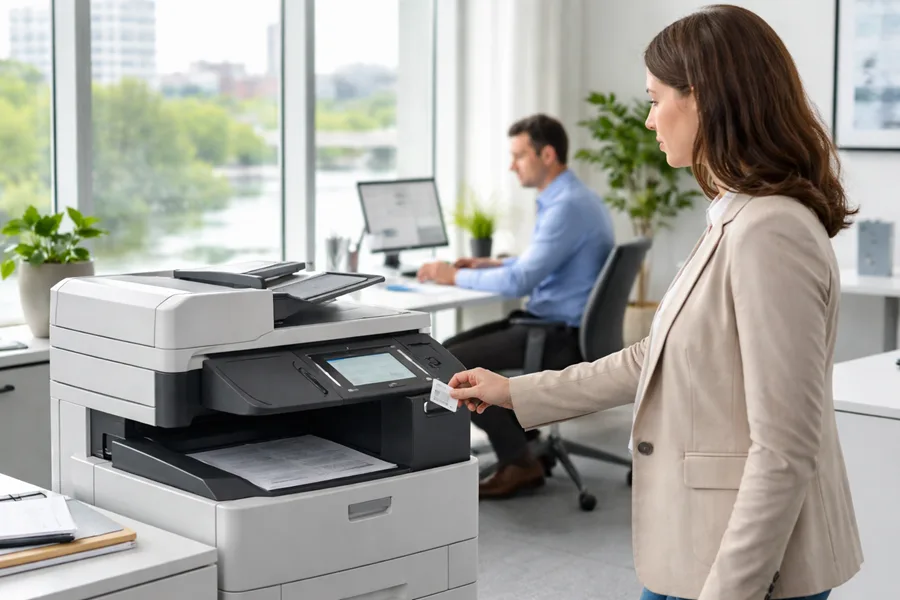
Advanced print security includes user authentication at the device, secure print release (pull printing), encryption for data in transit and at rest, and audit trails that record print activity for compliance. Authentication may use badges, PINs, or network credentials so only authorized staff retrieve sensitive documents, while secure erase and firmware management protect stored data. Audit logs support forensic review and regulatory reporting, helping finance, legal, and healthcare organizations meet compliance needs. AIS designs these controls to match each client’s risk profile so security is effective without disrupting daily work.
How Do Print Analytics and Reporting Drive Cost and Efficiency Insights?
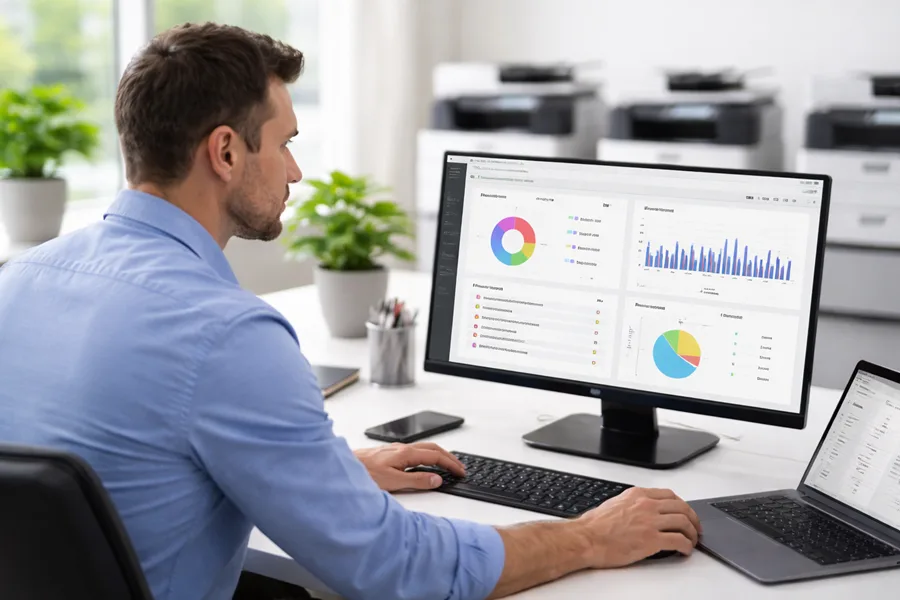
Print analytics collect usage by user, department, and device, calculate cost‑per‑page and cost centers, and spot anomalies that indicate misuse or failing equipment. Reports inform consolidation decisions, policy changes, and lease versus buy analysis, and enable chargeback or internal billing to encourage accountable printing. Trend analysis reveals seasonal patterns and helps forecast supplies, while anomaly detection flags unexpected spikes that may point to configuration or security issues. For Wilmington clients, analytics dashboards provide the KPIs leaders use to measure MPS success and prioritize next optimization steps.
What Are the Top Benefits of Managed Print Services for Wilmington Businesses?
Managed Print Services delivers measurable benefits across cost control, productivity, security, and sustainability that align with Wilmington business goals and regulatory expectations. Combining device consolidation, automated supplies, proactive maintenance, and analytics typically lowers total cost of ownership, reduces service incidents, and strengthens governance of document workflows. Benefits are best expressed as KPIs — percent reduction in print spend, uptime gains, waste reduction — which make progress easy to track and report.
Benefits mapped to KPIs:
Those quantifiable outcomes explain why organizations adopt MPS; the sections that follow expand on productivity, cost strategies, and mobile/cloud support.
How Can MPS Improve Office Productivity and Reduce Waste?
MPS boosts productivity by cutting printer‑related interruptions, simplifying print workflows, and automating administrative tasks. Default duplexing, print rules, and routing reduce paper use while centralized support shortens the time employees spend troubleshooting devices. With fewer emergency supply requests and faster repairs, staff spend more time on core work and IT is freed from repetitive printer support tasks. These changes deliver faster document turnaround and lower waste so teams can focus on higher‑value work.
What Cost Reduction Strategies Are Enabled by MPS in Wilmington?
MPS reduces costs through fleet consolidation, metered billing, departmental chargeback, and leasing or subscription models that convert large capital buys into predictable operating expenses. Consolidation cuts the number of devices and related maintenance contracts, while metered billing aligns charges to real usage. Leasing and subscription options make it easier to scale and refresh equipment without heavy upfront investment, improving cash flow. Together these strategies make print costs lower and simpler to forecast for Wilmington finance teams.
How Does MPS Support Mobile and Cloud Printing Needs in Wilmington?
MPS supports mobile and cloud printing by integrating secure cloud queues, drivers compatible with Google Workspace and Microsoft 365, and secure release workflows that let users print from smartphones or laptops without sacrificing security. Cloud solutions reduce driver management and help hybrid teams print and release jobs at any networked device securely. These capabilities support Wilmington’s mobile workforce while allowing IT to maintain control over print policies and access.
What Do Wilmington Businesses Say About Their Managed Print Services Experience?
Wilmington customers commonly cite measurable cost reductions, better uptime, and faster local support after switching to MPS, along with simpler reporting for compliance and sustainability. Clients often highlight improved visibility into departmental printing and easier budget forecasting as game‑changing outcomes. Common themes include satisfaction with response times, appreciation for predictable billing, and recognition of environmental gains from policy and device changes. The examples below summarize these typical success signals and how local support sustains results.
Which Success Stories Highlight Cost Savings and Efficiency Gains?
Local organizations often report meaningful monthly savings after consolidating devices and enforcing policies, frequently noting double‑digit percentage reductions in print spend. Common success points include fewer service tickets, reduced emergency supply purchases, and lower paper use after enabling default duplex and refining print queues. These changes reduce operational friction and create recurring monthly savings that show up on expense reports, supporting further investment in managed print programs and analytics‑driven policies across departments.
How Do Customers Rate AIS’s Local MPS Support and Service?
Customers judge AIS’s local support by responsiveness, technical know‑how, and contract flexibility, commenting that local technicians and remote monitoring shorten outage windows. Feedback emphasizes clear communication, reliable supply delivery, and service tiers that match mission‑critical device needs. The combination of a local field presence and remote management tools gives fast on‑site fixes plus proactive care — a balance customers identify as a key differentiator for steady operations and predictable costs.
Frequently Asked Questions
What types of businesses benefit most from Managed Print Services?
Managed Print Services helps a wide range of businesses, especially those in regulated fields like healthcare, finance, and legal that need strong document security and compliance. Organizations with high print volumes or multiple locations also see big gains from consolidation and centralized management. In short, any company aiming to optimize printing processes and reduce costs will find value in MPS.
How long does it typically take to see ROI from MPS?
ROI from MPS often appears within a few months, depending on the state of the print environment, the level of inefficiency, and how quickly changes are implemented. Many organizations report 15–30% savings on print costs shortly after deployment. Ongoing monitoring and fine‑tuning can increase those savings over time.
Can MPS integrate with existing IT infrastructure?
Yes. MPS can be configured to integrate with your current IT systems. Providers like Associated Imaging Solutions evaluate existing workflows and systems to ensure compatibility, including integration with document management platforms, cloud services, and security protocols. That lets you preserve current investments while improving print management.
What are the environmental benefits of using MPS?
MPS supports environmental goals by cutting paper and energy use. Common measures include default duplex printing, print quotas, energy‑efficient device selection, and toner recycling programs. Tracking and reporting these metrics helps organizations demonstrate sustainability progress to stakeholders and can improve reputation while lowering costs.
How does MPS support remote and hybrid work environments?
MPS supports remote and hybrid work with secure cloud printing solutions that let employees print from laptops and smartphones without compromising security. Secure print release ensures sensitive documents are accessed only by authorized users, wherever they are. This keeps hybrid teams productive while preserving control over print policies.
What should businesses consider when choosing an MPS provider?
When choosing an MPS partner, consider their industry experience, service range, and ability to customize solutions to fit your needs. Local support capabilities and response times matter, as do customer service reputation and technical offerings like security features and analytics. Choose a provider that aligns with your goals for cost control, security, and sustainability.
What Is Managed Print Services and How Does It Work?
Managed Print Services is an outsourced program that oversees an organization’s printers, supplies, maintenance, and print workflows to reduce cost and increase control. It starts with an audit to establish a baseline, followed by a tailored plan that consolidates devices, sets usage policies, and automates supplies and service. Implementation includes configuration, user training, and analytics, and ongoing management monitors performance and enforces policies. That lifecycle approach drives continuous improvement and aligns print operations with business objectives.
How Can MPS Reduce Printing Costs by Up to 30%?
MPS reduces costs through fleet consolidation, policy enforcement, automated supply management, and more efficient billing that removes redundant contracts and emergency expenses. Consolidation lowers the number of leases and service agreements, while analytics‑driven policies curb excessive color or large‑format printing. Automated reordering avoids premium rush shipments, and usage‑based billing assigns costs fairly across departments. Results vary by starting inefficiency, but combined measures commonly produce double‑digit reductions within the first year.
What Security Features Are Included in Wilmington’s MPS Solutions?
Typical security features include user authentication at the device, secure pull‑print release, encryption for data in transit and at rest, firmware update management, and audit logging of print activity. These controls prevent unauthorized document retrieval, protect stored data, and provide records for compliance audits. A layered MPS security approach reduces the risk surface associated with unmanaged printers and supports governance requirements.
How Does MPS Help Businesses Embrace Sustainability?
MPS advances sustainability by reducing paper with duplex defaults and print quotas, selecting energy‑efficient devices, instituting toner recycling, and enabling digital workflows that cut physical printing. Analytics track paper and energy usage so you can measure year‑over‑year improvements and feed CSR reporting. These measures shrink environmental footprint and operating costs, making sustainability both practical and financially sound.
What Are the Latest Trends in Managed Print Services for 2024?
Recent trends in MPS include AI‑driven analytics, cloud‑native print management, stronger zero‑trust device security, subscription pricing, and integrated sustainability reporting that ties print metrics to corporate ESG goals. AI enables predictive maintenance and anomaly detection, reducing downtime and optimizing parts replacement, while cloud platforms simplify management across hybrid workplaces. Subscription models increase financial flexibility, and security advances help printers fit into broader IT governance. These trends affect how Wilmington businesses plan MPS investments and measure returns.
AI-driven analytics: Predicts failures and optimizes supply ordering.
Cloud-based management: Simplifies cross-site administration and mobile printing.
Zero-trust device security: Ensures strict authentication and minimal trust assumptions.
Subscription pricing: Shifts capital expense to flexible OPEX models.
These trends shape procurement and vendor evaluations into 2025 and underscore the value of partners who combine local service with modern capabilities.
Related Posts
— Managed Print Services in Delaware Valley

— Managed Print Services for Philadelphia Businesses