

Copier Leasing in Chester County, PA

January 8, 2026
 0 views
 0 comments

Leasing copiers gives Chester County businesses access to current multifunction printers without a large upfront investment. It preserves cash flow, keeps technology current, and pairs equipment with local service and maintenance. This guide explains why leasing often makes more sense than buying for small and midsize offices, which copier classes fit common local needs, and how managed print services (MPS) can lower overall printing costs.
Whether you run a law firm, medical office, manufacturing shop, or marketing agency in Chester County, leasing delivers predictable monthly expenses, easy upgrades, and included support to keep operations moving. Read on for clear benefits, the copier types available for lease, a plain-language look at MPS, and how a local provider supports West Chester, Downingtown, Phoenixville, Coatesville, and Kennett Square. You’ll also find steps to request a quote and a concise FAQ to answer common leasing questions.
What Are the Benefits of Copier Leasing for Chester County Businesses?
Leasing replaces a large capital purchase with a predictable monthly payment, which helps preserve working capital for other priorities. It also shortens the replacement cycle so businesses can upgrade to newer multifunction copiers when a lease ends — maintaining support for cloud printing, mobile workflows, and modern finishing options. Many lease packages include service contracts and supplies; that reduces surprise repair bills and the time spent ordering toner or parts. The result is less downtime and fewer IT interruptions — a real advantage for local offices that rely on steady document workflows.
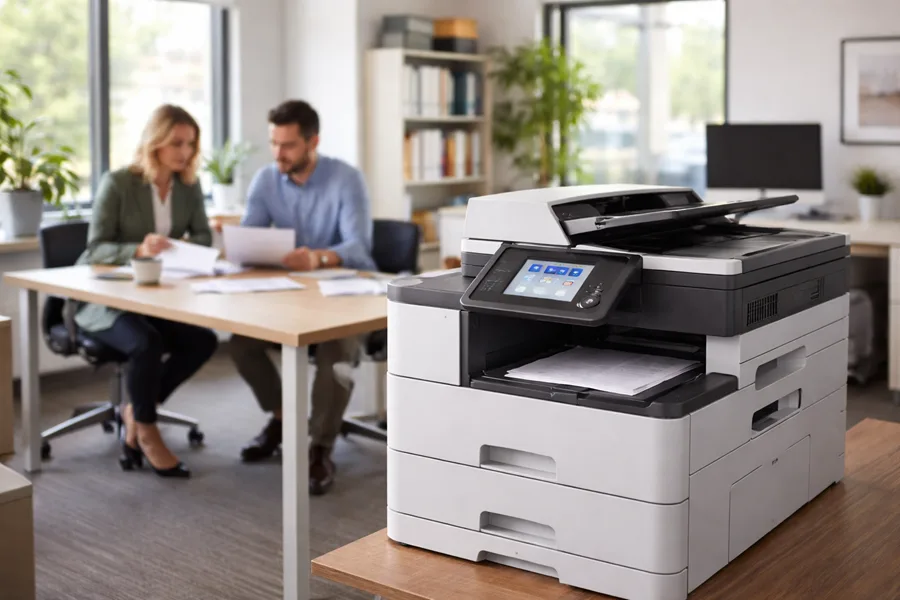
In practical terms, leasing delivers several clear advantages for Chester County workplaces:
- Predictable cash flow: Fixed monthly payments simplify budgeting for small and midsize firms.
- Access to current tech: Leasing makes cloud printing, mobile workflows, and advanced finishing affordable.
- Lower downtime risk: Bundled maintenance and supplies reduce service interruptions.
Those points naturally lead to a side-by-side look at the real cost differences between leasing and buying.
How Does Leasing Save Costs Compared to Buying?
Leasing lowers initial cash outlay and treats equipment as an operating expense rather than a capital asset, which eases cash flow for growing businesses. A typical 3–5 year lease spreads the cost into monthly payments; when maintenance and supplies are included, the steady monthly expense often compares favorably to the unpredictable bills of ownership. Monthly volume, color needs, and finishing options affect lease tiers and long-term value, so it makes sense to compare estimated monthly lease payments against ownership costs (including service contracts). Running a total cost of ownership (TCO) comparison over your planning horizon will show whether leasing or buying is the better choice for your office profile.
Leasing vs. Buying: Cost of Capital Services Analysis
A historical look at leasing, buying, and capital costs
Leasing, buying, and the cost of capital services, 1976
That financial context leads to the practical question: what does a modern copier lease actually include, and how does that affect uptime and usability?
What Technology and Support Are Included in Copier Leases?
Most modern leases cover on-site installation, preventive maintenance, consumables management, and remote monitoring that flags issues before they become outages. Many providers also include firmware updates, cloud-print connectors, and mobile-print capabilities so teams can print securely from phones and cloud drives. Local on-site support and clear response times are especially important for time-sensitive offices like law firms and medical practices. Knowing which services are included helps businesses pick the lease package that matches their required uptime and technology needs.
Next, we’ll match those capabilities to the common copier classes available to lease in Chester County.
Which Types of Copiers Can You Lease in Chester County, PA?
You can lease everything from compact black-and-white MFPs for small offices to high-speed color systems and wide-format printers for larger teams or specialty shops. Multifunction copiers combine print, scan, copy, and often fax in a single device; color models support marketing collateral and client-facing pieces; and wide-format printers handle banners, blueprints, or point-of-sale graphics. Lease pricing depends on speed (pages per minute), monthly duty cycle, color capability, and finishing options like stapling or booklet makers — so matching the copier class to your expected monthly volume prevents paying for unused capacity.

With those classes in mind, the next section explains common options for multifunction and color leases.
What Are Multifunction and Color Copier Leasing Options?
Multifunction copiers (MFPs) combine scanning, copying, and printing into a single workflow hub and come in color and black-and-white models. Tiers are set by speed and finishing capability. Color MFPs are ideal for teams that print brochures, presentations, or client materials, and they typically cost more to lease because of higher toner and maintenance needs. Specs that influence lease cost include pages-per-minute (ppm), monthly duty cycle, and finishing features like stapling, hole punching, and booklet creation. The right tier balances occasional color needs against recurring color volume so you don’t pay for capacity you rarely use.
For document-heavy small offices, black-and-white models are often the most cost-effective choice.
Are Black and White Copier Leases Available for Small Businesses?
Yes. Black-and-white multifunction printers are a practical, affordable option for many small businesses that mainly print contracts, invoices, and internal documents. B&W MFPs offer a lower cost-per-page and simpler maintenance, which keeps ongoing expenses predictable. Many leases for these models include toner replenishment and service, so monthly costs are easier to forecast. For moderate monthly volumes, a mid-tier B&W model usually offers the right mix of affordability and reliability, with the option to add a color device later if needs change.
With copier classes covered, here’s how local providers support Chester County towns and what local service looks like.
How Does Associated Imaging Solutions Serve Chester County Towns?
Associated Imaging Solutions (AIS) serves customers across Pennsylvania with a focus on the Philadelphia area and the Delaware Valley, extending leasing and managed print services into Chester County. AIS emphasizes flexible lease terms, included maintenance, competitive pricing, and responsive local support. For Chester County businesses looking for a local partner, AIS centers its approach on a straightforward leasing process and fast on-call service designed to reduce downtime and simplify device management. Local presence means quicker on-site response and a provider that understands the needs of West Chester, Downingtown, Phoenixville, Coatesville, and Kennett Square.
Here’s how AIS typically adapts services for different town business profiles:
- West Chester and Downingtown: Packages tuned for professional services and campuses, with a focus on secure document workflows.
- Phoenixville and Coatesville: Durable, practical solutions for small manufacturers and mixed-use offices that prioritize uptime.
- Kennett Square: Compact, color-capable options for creative firms and boutique agencies that need quick access to color printing.
Those local commitments lead into town-specific service expectations described next.
What Copier Leasing Services Are Offered in West Chester and Downingtown?
In West Chester and Downingtown, leasing services focus on secure document handling, campus-ready networking, and finishing that supports legal and administrative workflows. Providers often recommend multifunction systems with robust scanning and authentication features for offices handling sensitive client data. Fast on-site response times and flexible maintenance agreements are emphasized to reduce interruptions during peak periods. When reviewing lease proposals, businesses in these towns should pay attention to service level terms, toner management, and upgrade paths.
Next we’ll contrast those approaches with service strategies in nearby Chester County towns.
How Does AIS Support Businesses in Phoenixville, Coatesville, and Kennett Square?
In Phoenixville, Coatesville, and Kennett Square, AIS and similar local providers emphasize quick on-site repairs, managed print enrollments, and scalable lease options that reflect growth or seasonal swings. Typical strategies include a fleet assessment to see whether consolidating devices reduces costs and simplifies supplies management across locations. Local technicians who know area businesses shorten repair times, and bundled MPS options automate toner replenishment and meter tracking. Working with a local partner reduces logistical friction and keeps document workflows consistent.
With local coverage explained, many organizations turn to managed print services to lower costs and boost efficiency across leased fleets.
What Are Managed Print Services and How Do They Benefit Chester County Businesses?
Managed Print Services (MPS) centralize fleet management, supplies procurement, monitoring, and reporting to reduce total print costs and administrative overhead. MPS begins with a usage assessment, then consolidates devices where appropriate, automates toner replenishment, and delivers reports that guide policy and placement decisions. This coordinated approach cuts supply waste, reduces service incidents, and shifts work to the most cost-effective devices. For Chester County businesses, MPS typically lowers per-page costs and frees staff from routine printer management.
Key MPS components and the typical business impact include:
- Fleet assessment: Establishes usage baselines and identifies consolidation opportunities.
- Automated supplies: Prevents stockpiles and avoids emergency toner purchases.
- Proactive maintenance: Reduces downtime via remote monitoring and scheduled service.
Empirical Study on Managed Print Services Pricing and Customer Valuation
An empirical look at MPS pricing and how customers value managed print contracts
Empirical study on managed print services pricing, J Ning, 2014
Those MPS building blocks make it easier for local providers to deliver predictable costs and concrete operational improvements. Below we explain how those improvements translate into cost reductions.
How Can Managed Print Services Reduce Printing Costs and Improve Efficiency?
MPS cuts costs by optimizing device placement, enforcing print policies, and routing volume to the most efficient machines — reducing per-page expense and administrative waste. Automated supplies management prevents emergency buys and lowers inventory costs, while usage reports reveal opportunities to curb unnecessary color printing or consolidate small devices. IT and office managers also save time because they aren’t handling toner orders or routine troubleshooting. Over time, these operational changes produce measurable cost savings and better uptime.
Next, see what AIS typically includes for local managed print clients.
What Does AIS’s Managed Print Service Include for Local Clients?
AIS’s managed print offering commonly includes a fleet assessment, automated supplies management, remote monitoring, regular reporting, and proactive maintenance to avoid downtime. Those services centralize accountability for supplies and service while producing usage insights that support device consolidation and policy updates. Businesses considering MPS should request an assessment to see projected cost savings and workflow improvements for their specific environment.
That operational view leads into how leasing and onboarding work with a local provider.
How Does the Copier Leasing Process Work with Associated Imaging Solutions?
The leasing process starts with a needs assessment, moves to a tailored proposal that names the recommended machine class and lease terms, and finishes with delivery, installation, and onboarding into your network. Providers who emphasize simplicity reduce friction by offering clear timelines, transparent lease terms, and included service commitments. Associated Imaging Solutions follows a three-step workflow — needs assessment, proposal, and installation — to make leasing straightforward for Chester County businesses.
Here’s a quick summary of that three-step leasing workflow:
- Needs assessment: We evaluate pages per month, color usage, and finishing requirements.
- Proposal and lease review: You receive a tailored proposal that lists the recommended model, monthly payment, and included services.
- Delivery and onboarding: Installation, network setup, and staff training get the device ready for daily use.
Those steps also make clear what information speeds up a quote, which we cover next.
What Are the Steps to Get a Copier Lease in Chester County?
Start by documenting your current printing volume (monthly pages), the mix of color versus black-and-white, desired finishing features, and any space or network constraints. During assessment, expect recommendations on consolidation or specific models that match your volume. The proposal will detail lease length, monthly payment, and which services (toner supply, maintenance, etc.) are included. After signing, delivery, installation, and onboarding typically follow on an agreed schedule to minimize disruption.
Having these details ready speeds the quoting process and sets clearer expectations for your lease.
How Can Businesses Request a Custom Quote or Consultation?
To get a fast, accurate quote, provide estimated monthly page volume, the percent of color pages, preferred lease term (usually 36–60 months), and any required finishing or network features. Tell the provider how many users you have, when peak usage occurs, and whether you need security or cloud integration. Ask for a fleet assessment and a cost comparison that shows projected monthly payments, expected per-page costs, and included services. Supplying this information up front shortens turnaround and makes proposals easier to compare.
Common questions focus on cost ranges, the lease-versus-buy decision, and what to expect from service agreements. Because monthly payments depend on speed, color capability, duty cycle, and service inclusions, it’s normal to see ranges rather than exact quotes. Lease-or-buy decisions come down to cash flow priorities, expected equipment lifetime, and whether bundled service reduces your administrative overhead. The short answers below are designed for quick decision-making.
Is Leasing Better Than Buying Office Equipment in Chester County?
Leasing is often the better choice if you want to preserve capital, maintain predictable operating expenses, upgrade technology more easily, and reduce downtime risk with included maintenance. Buying can make sense if you expect low volume long-term, prefer ownership, and can handle service and supplies cost-effectively. Tax and accounting treatment may favor leasing for some organizations — consult your financial advisor for details. Ultimately, match device class, lease terms, and service inclusions to your actual workflows to determine which option yields the best total cost of ownership.
- Leasing benefits: Preserves capital, makes upgrades simpler, often includes maintenance and supplies.
- Buying benefits: You own the asset after payoff and may realize lower lifetime costs for low-volume users.
- Decision tip: Run a 3–5 year TCO comparison that includes service, supplies, and expected downtime.
These practical points help Chester County decision-makers choose the procurement path that suits their office equipment and document workflows.
Frequently Asked Questions
Related Posts
— Copier Leasing in University City, Philadelphia
— Copier Leasing in Northeast Philadelphia