

Managed Print Services in Bucks County, PA

December 30, 2025
 0 views
 0 comments
AI Overview:
Managed Print Services Bucks County help local businesses streamline office printing, reduce hidden costs, improve document security, and support sustainability goals through centralized printer fleet management. This article explains how MPS delivers predictable cost-per-page pricing, proactive maintenance, secure print controls, and greener operations by consolidating devices, managing supplies, and enforcing smart print policies. Using Associated Imaging Solutions (AIS) as a local example, it shows how Bucks County organizations can turn unmanaged printing into a secure, efficient, and cost-controlled operation.
Streamline Office Printing and Cut Costs
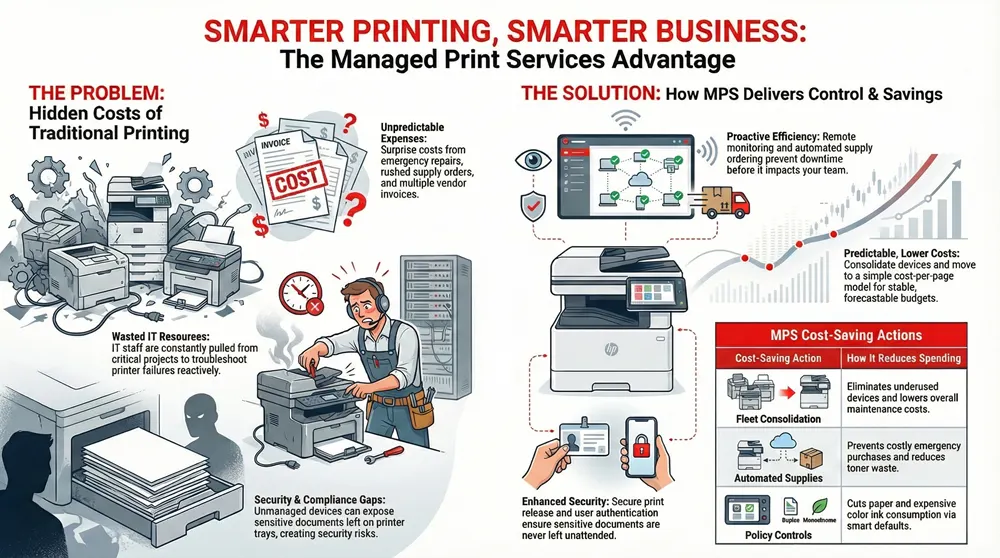
Managed Print Services (MPS) simplify and optimize workplace printing by pairing device management, supplies fulfillment, and policy controls into a single, managed program that reduces costs and downtime for Bucks County organizations. This guide explains what MPS does, why local companies — from Doylestown to the surrounding communities — should consider it, and how printer fleet management in Bucks County delivers measurable savings, stronger document security, and greener operations. You’ll find clear explanations of fleet assessments, toner and supply management, remote monitoring, and policy enforcement — the pieces that produce predictable cost‑per‑page pricing and smoother document workflows.
We also walk through how to uncover hidden printing expenses, review technologies that enable automated maintenance and secure print release, and outline practical sustainability steps to cut waste and energy use. Finally, the article shows how local providers implement these solutions, using AIS as a factual example of the assessment‑to‑management process. Keywords such as managed print services Bucks County PA, printer fleet management Bucks County, and print security Bucks County are naturally included to help local decision‑makers find relevant guidance.
What Are Managed Print Services and Why Do Bucks County Businesses Need Them?
Managed Print Services (MPS) is a coordinated program that centralizes management of printers and copiers, automates supplies and maintenance, and enforces printing policies to cut costs and operational friction. MPS combines inventory visibility, usage analytics, and service workflows so administrators can remove redundant devices and move to cost‑per‑page pricing that reduces surprise expenses. Bucks County organizations commonly face distributed offices, mixed‑brand fleets, and uneven service response — issues MPS solves by standardizing configurations and consolidating control across locations. The outcome: steadier spending, less time for IT troubleshooting, and clearer data for sustainability reporting and compliance.
How Do Managed Print Services Streamline Print Management in Bucks County?
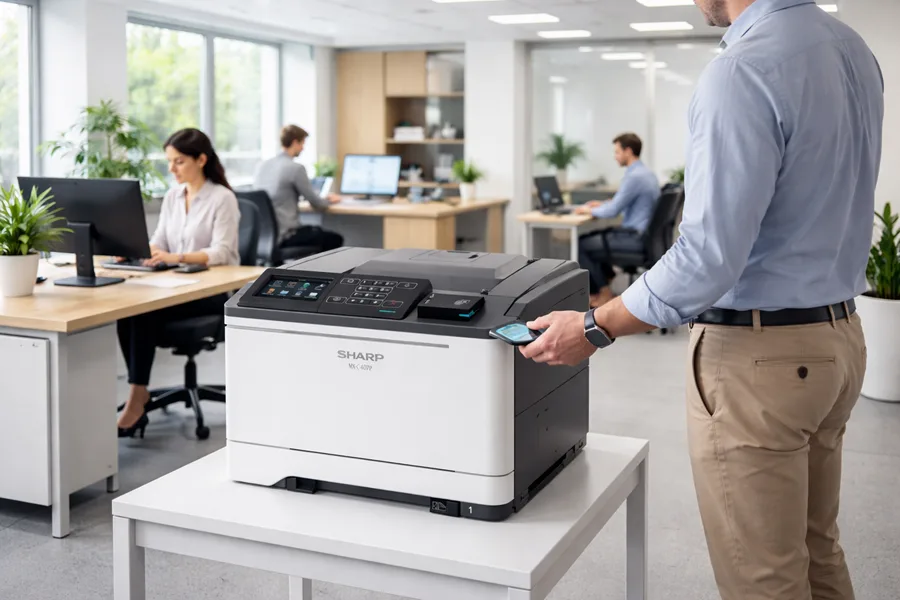
MPS streamlines operations by starting with a fleet assessment, standardizing device models, and centralizing management with telemetry and cloud controls. Typical actions include cutting the number of device types, setting duplex and grayscale defaults, and creating automated toner reorder triggers to prevent emergency supply runs. The shift from reactive to proactive print management means fewer service calls, fewer idle machines, and simpler billing. That frees IT to focus on priority projects and improves uptime and productivity across the office.
What Key Benefits Can Bucks County Businesses Expect from MPS?
Companies that adopt MPS gain better cost predictability, a lower total cost of ownership, and measurable productivity improvements from fewer printer interruptions. Security and compliance strengthen through secure print release, user authentication, and centralized audit logs that document document handling for internal review or regulatory needs. Environmentally, MPS encourages device consolidation and recycling programs that reduce energy use and waste. Together these benefits produce clearer budgets, faster workflows, and a smaller environmental footprint for local organizations.
How Can Managed Print Services Reduce Printing Costs for Bucks County Businesses?
MPS cuts printing costs by addressing several levers at once: consolidating devices, switching to cost‑per‑page models, and optimizing consumable usage with managed supplies. The process begins with a baseline inventory and usage analysis to find underused devices and expensive color printing, then applies policy rules and consolidated hardware to lower per‑page costs. Automated supplies and proactive maintenance reduce emergency service fees and downtime, while centralized billing removes fragmented invoices so finance teams can forecast operating spend more reliably.
Below are concrete steps businesses can take to capture savings and a table summarizing common cost levers.
The primary cost-saving steps are:
- Consolidate the fleet: Cut device variety and position multifunction copiers where they serve teams best.
- Implement toner management: Use auto‑reorder triggers and monitor consumable consumption.
- Apply policy controls: Default duplex printing and limit high‑cost color where appropriate.
This table shows how specific interventions translate into tangible savings and lower operational variability, helping you forecast ROI for a print management program.
What Are the Hidden Printing Costs That MPS Eliminates?
Hidden printing costs include emergency service calls, untracked consumable waste, time spent reconciling invoices, and productivity lost during device downtime. Rushed supply orders and frequent repairs can spike monthly expenses, and a mixed fleet increases parts complexity and labor. MPS tackles these by centralizing supplies ordering, scheduling preventive maintenance, and consolidating billing to reduce administrative overhead. For example, replacing three underused desktop printers with one centrally located multifunction device lowers consumable waste and the combined cost of several service contracts.
How Does AIS Provide Cost-Effective Print Solutions in Bucks County?
Associated Imaging Solutions (AIS) offers local services that map directly to these cost-saving practices: flexible leasing and copier rentals to avoid large upfront purchases, managed supplies and toner programs to prevent emergency orders, and local repair and support to minimize downtime. AIS partners with Ricoh and Sharp and is a Sharp Certified Seller, giving access to dependable hardware that supports consolidation strategies. Their local call center is staffed by trained representatives, and AIS promotes 24/7 support and transparent pricing with no hidden fees — features that help Bucks County businesses turn print optimization plans into predictable monthly operating costs. These service elements demonstrate how a local provider operationalizes the cost levers above and supports implementation.
How Do Managed Print Services Enhance Office Efficiency and Security in Bucks County?
MPS improves efficiency by delivering remote monitoring, centralized print policies, and automated workflows that cut manual steps and interruptions. Telemetry flags hardware issues before they escalate, auto‑supply ordering removes routine procurement tasks, and cloud or server‑based print routing makes mobile and remote printing easier. Security strengthens through secure print release, user authentication, firmware management, and detailed audit trails that record printing activity for compliance and risk reduction. Combined, these capabilities reduce operational risk while improving user experience and uptime across Bucks County offices.
What Technologies Support Printer Fleet Management and Remote Monitoring?
Key technologies behind modern MPS include remote telemetry for device health, cloud print management for centralized queue control, and auto‑supply triggers for consumable logistics. Telemetry captures performance metrics and error codes to feed dashboards and schedule proactive service, reducing downtime. Cloud print management centralizes queues and supports secure mobile printing, and automated ordering systems trigger consumable shipments based on real usage. Together these tools turn device data into actionable insights and fewer service disruptions.
This comparison clarifies how specific tools meet operational needs, turning device‑level telemetry into organization‑level reliability and efficiency.
How Does MPS Ensure Robust Document Security for Bucks County Businesses?
MPS deploys security controls to protect sensitive documents and meet compliance requirements: secure release or pull printing prevents unattended outputs, user authentication ties actions to individuals, and encryption protects data in transit and at rest. Firmware management and regular security patching shrink device vulnerabilities, while centralized logging and audit reports provide documentation for governance or regulatory review. For small and mid‑sized Bucks County businesses, these measures reduce the risk of data leakage and make the print environment part of an overall IT security strategy rather than an unmanaged gap.
AIS supports these security practices through remote monitoring and proactive maintenance that keep device firmware up to date and reduce exposure windows. Local technicians and a staffed call center provide faster remediation for security‑related device issues, which is a practical advantage for organizations implementing print security controls.
What Sustainable Printing Practices Does Managed Print Services Promote in Bucks County?
MPS supports sustainability by enabling duplex‑as‑default, applying rules‑based color restrictions, consolidating devices, and running toner and hardware recycling programs that cut paper use, consumable waste, and energy consumption. The approach is data driven: usage reports reveal high‑volume behaviors and policy opportunities, and consolidation reduces the number of devices drawing standby power. MPS also supplies measurable metrics for sustainability reporting — paper reduction, energy savings, and diverted recyclables — which lower environmental impact and often deliver secondary financial benefits from reduced supply and energy costs.

How Does MPS Help Bucks County Businesses Reduce Environmental Impact?
Practical actions include setting duplex printing as the default, routing large jobs to centralized high‑efficiency copiers, offering toner recycling, and using remanufactured consumables where appropriate. Policy enforcement limits unnecessary color printing and encourages digital workflows, together cutting paper and toner usage. Reporting tools quantify those reductions so organizations can track progress and share results with stakeholders. For Bucks County companies, these measures combine environmental stewardship with cost savings, making a clear business case for greener print operations.
This table links green initiatives to environmental benefits and direct business outcomes, showing how sustainability aligns with operational savings.
What Are the Benefits of Green Print Initiatives for Local Companies?
Green print programs deliver measurable cost savings, boost corporate reputation, and simplify procurement for sustainability‑minded buyers. Lower paper and consumable use improves operating margins, while documented sustainability performance can strengthen client and community relationships across Bucks County. Employee engagement also improves when staff see real environmental commitments, supporting retention and brand perception. In short, sustainability becomes both a values‑driven and financially sensible element of modern print management.
Why Choose Associated Imaging Solutions for Managed Print Services in Bucks County?
Associated Imaging Solutions (AIS) offers local capabilities that match what Bucks County businesses need from Managed Print Services: flexible leasing, trusted hardware partnerships, and fast, responsive support. As a Sharp Certified Seller working with Ricoh and Sharp, AIS provides proven hardware choices that support fleet consolidation and enterprise‑grade security. Their service mix includes copier rentals and leases, repairs, document management, and Managed Print Services so organizations can pick the combination that fits operational and financial goals. A local presence across Philadelphia and the Delaware Valley makes on‑the‑ground response and coordination for multi‑site programs easier.
What Makes AIS the Trusted Local MPS Partner in Bucks County?
AIS signals trust through brand partnerships, a staffed call center with trained representatives, and a commitment to transparent pricing and around‑the‑clock support. Local technicians and rapid response reduce downtime and make preventive maintenance practical for Bucks County offices. Flexible leasing and rental options let businesses avoid large capital outlays and move to predictable operational billing. Those attributes translate to faster repairs, simpler procurement, and access to reliable hardware without heavy upfront costs.
How Do AIS’s Flexible Leasing and Support Services Benefit Bucks County Businesses?
Flexible leasing and copier rentals from AIS let organizations scale printing capacity without large capital commitments, shifting costs from CapEx to OpEx to preserve cash flow. Predictable lease terms and managed supplies programs create steady monthly costs that simplify budgeting and forecasting. AIS’s trained call center and local support help minimize disruption from device failures, and partnerships with Ricoh and Sharp ensure consolidation choices rest on durable, well‑supported hardware. Together, these services reduce operational risk and make print expenses more predictable for local companies.
What Are the Most Common Questions About Managed Print Services in Bucks County?
Prospective buyers often ask about the scope of an assessment, implementation timelines, security features, and how MPS compares to traditional approaches. Clear answers help stakeholders decide if MPS fits their needs and what a transition looks like. Below are straightforward responses to frequent questions, including what an assessment covers and how a data‑driven managed program differs from reactive print management.
What Is Included in a Managed Print Services Assessment for Bucks County Businesses?
An MPS assessment typically includes a complete device inventory, capture of usage metrics, a cost baseline, and recommendations for consolidation and policy changes. Assessors gather data on device types, print volumes by user or department, consumable patterns, and service history to spot cost and efficiency opportunities. Deliverables usually include a prioritized action plan with projected cost‑per‑page improvements and implementation steps. For local providers, the workflow moves from assessment to implementation and then to ongoing monitoring and support so optimization continues beyond the initial project.
How Does MPS Compare to Traditional Print Management in Bucks County?
Comparing MPS to traditional management highlights operational and financial differences that matter to local businesses. MPS is proactive, data driven, and centralized; conventional methods are often reactive, fragmented, and device‑by‑device. The contrasts below show how MPS changes outcomes and cuts hidden costs.
- Proactive vs. Reactive: MPS schedules preventive maintenance; traditional approaches wait for failures.
- Centralized Visibility vs. Fragmented Data: MPS delivers dashboards and usage analytics; conventional methods lack consolidated reporting.
- Predictable Costs vs. Variable Costs: MPS often uses cost‑per‑page or leasing to stabilize expenses; traditional approaches accumulate unpredictable repair and supply charges.
These differences explain why organizations seeking efficiency, control, and budget certainty usually prefer a managed print model. Associated Imaging Solutions and other local vendors turn that analysis into measurable results through assessment, implementation, and continuous monitoring.
Frequently Asked Questions
What types of businesses can benefit from Managed Print Services in Bucks County?
Managed Print Services help a wide range of organizations — small and mid‑sized businesses, schools, healthcare practices, and corporate offices. Any operation that relies on regular printing can use MPS to streamline workflows, lower costs, and boost productivity. By consolidating resources and applying efficient management practices, teams can realize meaningful savings and smoother day‑to‑day operations.
How long does it take to implement Managed Print Services?
Implementation timelines vary by organization size and complexity. Most programs move from assessment to initial changes in a few weeks to a few months. The process starts with an assessment of your current environment, then a tailored plan for consolidation, policy enforcement, and staff training. Ongoing monitoring and support follow to ensure the program performs and adapts over time.
What are the security features included in Managed Print Services?
MPS includes robust security features such as secure print release, user authentication, and encryption for data in transit and at rest. Providers also manage firmware updates and security patches to limit vulnerabilities. Centralized logging and audit trails monitor printing activity and help demonstrate compliance with internal and regulatory requirements.
Can Managed Print Services help with compliance and regulatory requirements?
Yes. Features like secure print release and user authentication ensure sensitive documents are accessed only by authorized staff. Detailed audit trails and centralized logging provide documentation useful for compliance audits. MPS also promotes sustainable practices that may help satisfy environmental or procurement regulations in certain industries.
How does MPS contribute to sustainability efforts in businesses?
MPS encourages duplex printing, color controls, and device consolidation to reduce paper and energy use. It supports toner and hardware recycling programs and provides measurable metrics so organizations can track progress. These actions lower environmental impact and often produce direct cost savings, reinforcing corporate social responsibility efforts.
What kind of support can businesses expect from MPS providers?
MPS providers typically offer proactive maintenance, remote monitoring, and responsive customer service. Many provide 24/7 support to address issues quickly and reduce downtime. Training for staff and regular assessments help optimize the program over time so your print environment continues to improve.
Related Posts

— Managed Print Services for Philadelphia Businesses

— Copier Leasing in University City, Philadelphia