


Managed Print Services in Montgomery County, PA

January 15, 2026
 0 views
 0 comments

Managed Print Services in Montgomery County, PA — Cut Costs, Improve Uptime, and Secure Your Printing
Managed print services (MPS) bundle device management, supplies, security, and workflow automation into one local program that reduces cost and complexity for Montgomery County businesses. Below we explain how MPS works, why organizations in King of Prussia and nearby towns typically see better cost‑per‑page and higher uptime, and which operational and security controls produce measurable results. Many teams still struggle with scattered printers, unpredictable supply costs, and unsecured workflows; a structured MPS program turns those pain points into predictable budgets, smoother employee workflows, and stronger data protection. Continue for clear definitions, step‑by‑step fleet optimization tactics, security and sustainability best practices, and practical next steps to begin an assessment with a trusted local vendor. Each section includes actionable lists, comparison tables, and local examples so decision‑makers can quickly evaluate options to lower print spend while improving reliability and compliance.
What Are Managed Print Services and How Do They Benefit Montgomery County Businesses?
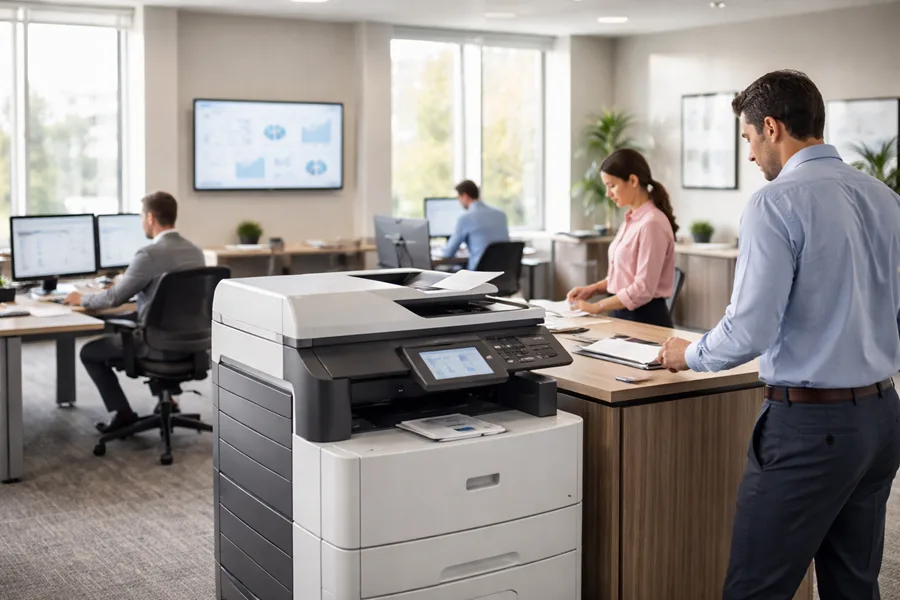
Managed print services (MPS) are a coordinated package of services — device leasing and management, consumable delivery, proactive maintenance, monitoring, and reporting — built to lower printing costs and administrative effort while improving security. MPS works through centralized oversight: usage data and remote monitoring expose waste and failure points, and standardized devices plus rules‑based printing reduce variability and expense. Montgomery County businesses typically see a lower total cost of ownership, fewer IT interruptions, and consistent workflows that speed document handling across offices in King of Prussia, Norristown, and neighboring communities. The list below summarizes the primary, practical benefits local businesses experience with MPS.
This list highlights common outcomes and why they matter for local operations.
- Lower Printing Costs: Consolidation and rules‑based printing reduce paper and toner spending.
- Predictable Budgets: Leasing and managed supplies turn variable expenses into forecastable monthly costs.
- Improved Uptime: Remote monitoring and local service reduce device downtime and workflow interruptions.
- Enhanced Security: Features like secure print release and encryption lower the risk of data exposure.
- Sustainability Gains: Duplex defaults and recycling programs cut paper and waste.
These outcomes set the stage for a closer look at the components of a typical MPS engagement and how each element reduces operational friction.
What Is Included in Managed Print Services for Local Businesses?
MPS mixes hardware, software, and managed processes: right‑sized multifunction copiers and desktop printers, remote monitoring and analytics, automated consumable replenishment, preventive maintenance, and reporting. Hardware provisioning ensures devices match actual needs, while software tools track pages per device and cost‑per‑page. Consumable management automates toner ordering and inventory control, cutting emergency orders and on‑site storage. Together these services move routine print management off internal IT so staff can focus on core business priorities — and they pave the way for the cost‑reduction tactics described next.
How Do Managed Print Services Reduce Printing Costs and Improve Efficiency?
MPS drives savings through a repeatable sequence: assessment and consolidation, device standardization, rules‑based printing, and automated supply replenishment backed by monitoring. The assessment spots underused machines and expensive color devices, creating consolidation opportunities and a lower cost‑per‑page baseline. Policy changes — duplex defaults, secure‑print release, department quotas — cut unnecessary output and encourage digital workflows. Ongoing analytics and service agreements protect those gains by alerting providers to issues before users feel the impact, which leads naturally into local fleet optimization steps.
Empirical Study on Managed Print Services Pricing and Customer Valuation
This paper examines contractual relationships between MPS providers and institutional customers using a proprietary dataset. On the customer side, demand for printing proved relatively insensitive to service price within observed contracts. The study also finds individual customer valuation is shaped heavily by the broader population valuation, with valuation declining as fleet size grows — a sign of market concentration among larger organizations. From the provider perspective, optimal contracts balance expected earnings with earnings variability, indicating provider risk aversion. Overall, customers across industries and fleet sizes contributed similar risk‑adjusted returns, suggesting strong competition among providers.
Empirical study on managed print services pricing, J Ning, 2014
How Can Businesses in King of Prussia Optimize Their Printer Fleets with AIS?

Printer fleet optimization analyzes device utilization and aligns hardware, placement, and policies so devices support efficiency, uptime, and security. Optimization relies on key metrics — pages per device, cost‑per‑page, uptime, and service incident frequency — then right‑sizes devices and relocates equipment to remove redundant capacity and improve access. For King of Prussia operations, this means fewer breakdowns, less supply waste, and faster employee workflows in busy office and retail settings. Associated Imaging Solutions (AIS) brings local expertise in fleet assessments, flexible leasing, and continuous monitoring to turn optimization plans into steady operational performance. If you’re ready for a localized assessment, AIS can provide a quote or a consultative review by phone to discuss objectives and timelines.
Below is a practical comparison of common fleet optimization approaches and when each is the best fit for local businesses.
This table helps you choose the right approach based on usage patterns and budget priorities and introduces leasing scenarios for further discussion.
What Is Printer Fleet Optimization and Why Is It Important?
Fleet optimization matches device types and locations to actual usage to lower costs and improve uptime by tracking pages per device, average downtime, and cost‑per‑page. It typically uncovers redundant printers and recommends consolidating inefficient desktop units into centrally managed multifunction devices, reducing maintenance overhead and simplifying supplies. With usage metrics in hand, managers can set policies to discourage unnecessary color printing and promote duplexing, producing measurable cuts in supply consumption. Those results inform decisions about leasing versus purchasing and how a lease supports regular refresh cycles.
How Does AIS Provide Flexible Copier and Printer Leasing Solutions?
Flexible leasing from a local partner converts capital expenditures into predictable operating costs, often bundling maintenance and supplies into a single monthly payment for easier budgeting. Leasing also schedules technology refreshes without disruptive capital approvals, keeping devices current with security and efficiency features. AIS designs lease options to scale with growth and offer upgrade paths that reduce the risks of aging hardware. After outlining leasing benefits, the following section describes the specific cost‑reduction strategies AIS applies to local fleets.
This breakdown clarifies lease choices and shows when each option delivers the most business value.
What Strategies Does AIS Use to Reduce Print Costs in Montgomery County?
Cost reduction combines a data‑driven assessment with tactical moves like device consolidation, policies to cut waste, automated supply management, and vendor‑managed service agreements. The audit is the key step: it reveals where organizations can remove low‑use machines, standardize toner cartridges, and apply rules‑based printing to eliminate unnecessary output. AIS applies these tactics in local contexts to secure measurable savings and operational improvements while preserving necessary functionality for each department.
The table below compares common strategies and estimated savings so decision‑makers can scan trade‑offs quickly.
This comparison clarifies each strategy’s expected impact and helps prioritize actions during planning and rollout.
How Does a Print Assessment and Audit Identify Cost Savings?
A print assessment gathers device inventory, meter reads, service history, and user behavior to calculate a baseline cost‑per‑page and spot consolidation candidates. Auditors pull network and local device data to reveal utilization patterns and highlight underused units or costly color printers being used for low‑value tasks. Typical deliverables include a ranked list of devices to remove or replace, suggested policy changes (like duplex defaults), and a projected savings estimate. Those outputs set the stage for targeted supply management and continuous monitoring discussed next.
What Are the Benefits of Toner and Supply Management Services?
Toner and supply management automates ordering based on actual usage, removing manual purchase cycles and reducing emergency outages that disrupt work. Automated replenishment maintains optimal inventory, lowers on‑site storage needs, and cuts procurement admin time. Centralized supply contracts and standardized consumables make pricing and replacements simpler across the fleet. These operational gains feed predictable budgeting and sustained cost reductions while supporting security and sustainability goals.
Optimizing Printer Usage with Data Analytics for Institutional Efficiency
As institutions adopted more IT, printing remained central to daily operations but often went unmanaged, generating unnecessary cost and waste. Analytical systems that track printing behavior reveal usage patterns and help organizations make data‑driven decisions. By applying those insights, institutions improve operational efficiency, reduce costs, and lower environmental impact. Implementing policies informed by analytics — for example, reducing unnecessary color prints — significantly cuts paper and toner waste and supports long‑term resource planning.
Optimizing printer usage through data analytics for enhanced institutional efficiency, 2025
How Do Secure and Sustainable Printing Practices Protect Montgomery County Businesses?
Secure and sustainable printing practices protect sensitive information while supporting corporate sustainability targets. They combine technical controls, user policies, and device settings to reduce waste and exposure. Common printer risks include unprotected hard drives, unsecured network endpoints, and unattended sensitive print jobs; addressing these requires access controls and disciplined device management. Sustainability measures — duplex defaults, toner recycling, and energy‑efficient hardware — lower paper use and energy consumption, reducing both cost and the organization’s environmental footprint.
Below is a concise checklist of security and sustainability controls every managed print program should include.
- Secure Print Release: Require user authentication at the device before documents print.
- Encryption and Firmware Management: Use encrypted connections and keep firmware patched.
- Default Duplex and Monochrome Policies: Set defaults to reduce paper and color use.
- Recycling Programs: Provide toner cartridge take‑back and recycling procedures.
Applied together, these controls raise data protection and produce measurable sustainability results. The sections below expand on security and eco practices in more detail.
What Are Best Practices for Printer Data Security in Managed Print Services?
Printer security best practices include secure print release (device authentication), network segmentation for printers, TLS/SSL encryption for data in transit, and routine firmware updates to close vulnerabilities. MPS enforces these via centralized policy configuration, patch management, and monitoring for anomalous print behavior. Role‑based access and user authentication reduce risk from unattended printouts, while encrypted storage or secure erase routines protect documents stored on device drives. Implementing these controls through an MPS program lowers compliance risk and makes security part of everyday device management.
How Do Eco-Friendly Print Solutions Support Sustainability Goals?
Eco‑friendly print solutions cut paper, toner, and energy use through device configuration, user policies, and recycling programs that track environmental performance. Enforcing duplex and monochrome defaults, enabling low‑power sleep modes, and choosing ENERGY STAR®‑rated devices all reduce consumption. Toner recycling and managed supply programs keep cartridges out of landfills and align replenishment with actual need. Monitoring and reporting provide the behavioral data necessary to measure reductions and set achievable sustainability targets — key features to expect from a local provider.
What Are the Key Features of AIS’s Managed Print Services in Montgomery County?
A reliable local MPS provider combines responsive on‑site support, flexible leasing, proactive monitoring, strong manufacturer partnerships, and eco‑friendly program options to increase uptime and reduce cost. Associated Imaging Solutions highlights 24/7 support availability, adaptable lease plans, and partnerships with major manufacturers to deliver current devices and timely on‑site response. Those features translate to predictable expenses, faster incident resolution, and access to modern security and productivity capabilities. The table below maps specific AIS features to the practical impact they deliver for Montgomery County businesses.
This table shows AIS service features, what each does, and the concrete business impact.
Knowing these features helps decision‑makers match provider capabilities to operational priorities, and it leads into why continuous support and flexible leasing affect service quality.
How Does 24/7 Support and Local Expertise Enhance Service Quality?
24/7 support paired with local technicians shortens mean time to repair because on‑site resources can address failures faster than remote‑only models. Local teams also understand regional workflows and can recommend configurations tailored to Montgomery County operations. Around‑the‑clock access reduces the chance that production‑critical printing stays offline outside business hours, preserving continuity. These service advantages make it simpler for organizations to sustain high uptime and predictable operations.
Why Are Flexible Leasing Options and State-of-the-Art Technology Important?
Flexible leasing spreads costs over time and makes upgrades predictable, avoiding the risks tied to aging hardware — higher maintenance and security gaps. Modern devices from reputable manufacturers are more energy efficient, include advanced security controls, and integrate better with digital workflows. Bundling leasing with managed services ensures upgrades are seamless and new features are adopted quickly. Those benefits are why many organizations choose to partner with a managed print provider.
How Can Montgomery County Businesses Get Started with Managed Print Services?
Starting an MPS engagement typically follows four clear phases: assessment, proposal, pilot or implementation, and ongoing management with reporting to protect savings and measure ROI. The assessment collects device and usage data to build a baseline; the proposal outlines recommended device changes, policy shifts, and projected savings. A pilot or phased rollout validates assumptions before full deployment, and ongoing management uses monitoring and regular reviews to sustain and improve results.
Follow these four steps to begin with managed print services.
- Assessment: Gather inventory, meter reads, and usage data to establish a baseline.
- Proposal: Receive a tailored plan with consolidation recommendations and a cost model.
- Implementation: Deploy devices, policies, and monitoring in a pilot or phased rollout.
- Ongoing Management: Maintain monitoring, automate supplies, and run periodic reviews to preserve savings.
This sequence sets expectations and prepares your team to request a formal quote or consultation; contact options are described in the section below.
What Is the Process for a Print Assessment and Customized MPS Plan?
A print assessment starts with data collection from networked and local devices to build a comprehensive inventory and usage profile, including meter readings, service history, and stakeholder interviews about workflow needs. Analysts then identify consolidation targets, recommend device models and placements, and propose policy changes such as duplex defaults and secure release. The result is a customized plan outlining device changes, leasing or purchase options, expected savings, and an implementation timeline. With that plan, leadership can approve a pilot or full rollout and proceed to vendor selection and contract setup.
How Can Businesses Request a Quote or Consultation from AIS?
To contact Associated Imaging Solutions, call the local office to describe your goals, request a print assessment, and arrange on‑site or remote data collection. Before you call, gather a basic device inventory and an estimate of monthly print volumes to speed the conversation. After the request, AIS typically provides an assessment proposal with recommended next steps and a cost model aligned to your priorities. For businesses that prefer direct contact, calling the local number connects you to a regional representative who can schedule the assessment and review options.
This final step gives businesses a clear path from initial inquiry to measurable print cost reduction and more reliable operations.
Frequently Asked Questions
What types of businesses can benefit from Managed Print Services?
Managed Print Services help a wide range of organizations — small and medium businesses, large enterprises, schools, and healthcare providers. Any operation that depends on printing for daily workflows can realize cost savings, better uptime, and improved security by optimizing its print environment.
How does MPS enhance data security for businesses?
MPS improves security with measures like secure print release, encryption for data in transit, and regular firmware updates. Requiring authentication at the printer prevents sensitive documents from sitting unattended, and centralized management enables quick detection and response to potential threats, helping meet regulatory and internal security requirements.
What are the environmental benefits of implementing MPS?
MPS supports sustainability through duplex defaults, reduced color output, toner recycling programs, and energy‑efficient devices. By cutting unnecessary prints and matching supplies to actual usage, organizations lower paper and toner waste and reduce energy consumption — contributing to measurable environmental improvements.
How can businesses measure the success of their MPS implementation?
Success is measured with KPIs such as cost savings, reduced print volume, improved device uptime, and productivity gains. Regular monitoring and reporting let you compare before‑and‑after metrics and make data‑driven decisions to refine policies and maintain savings.
What should businesses consider when choosing an MPS provider?
Evaluate provider experience, service range, responsiveness, and leasing flexibility. Look for a provider that customizes solutions to your needs, demonstrates local support capability, and commits to sustainability. Client testimonials and case studies are also useful for validating performance and reliability.
Can MPS be integrated with existing IT infrastructure?
Yes. MPS providers assess your current environment for compatibility and integrate monitoring, management, and reporting without disrupting daily operations. Proper integration ensures print services align with your IT frameworks and security policies.
What are the potential challenges of implementing MPS?
Challenges can include staff resistance to change, initial assessment and implementation costs, and the need for ongoing training. Clear communication, a phased rollout, and close collaboration with your MPS provider help minimize disruption and ensure a smooth transition.
Related Posts
— Managed Print Services in Delaware Valley

— Managed Print Services for Philadelphia Businesses