


Managed Print Services in Delaware County, PA

January 6, 2026
 0 views
 0 comments
Managed Print Services — Delaware County, PA: Cut Costs, Tighten Security, and Streamline Printing
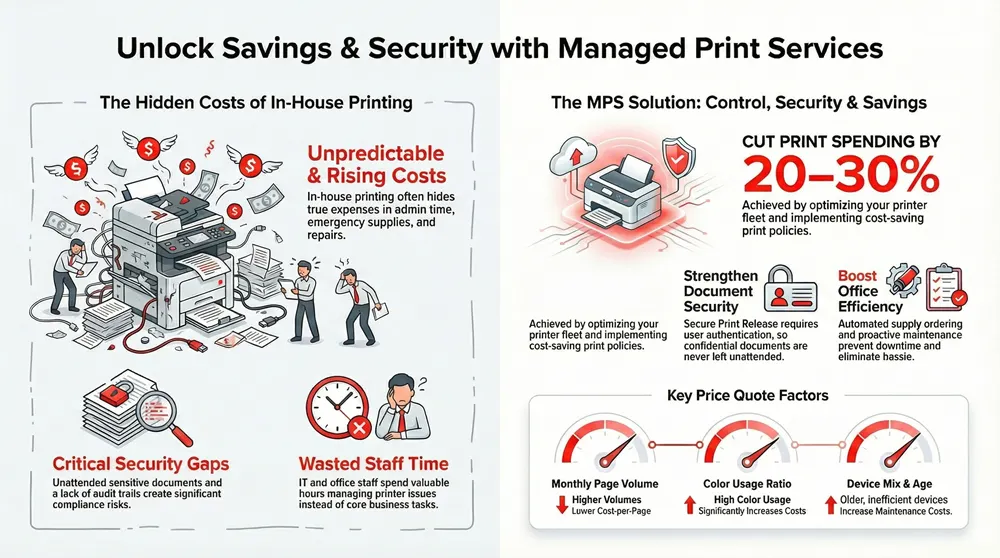
Managed Print Services (MPS) simplify how organizations buy, run, secure, and pay for their printers by bundling assessment, device management, supplies, maintenance, and analytics into a single program. For Delaware County businesses, MPS cuts administrative hassle, strengthens document security, and lowers total cost of ownership — all while improving workflow across main offices and remote locations. This article walks through what an MPS program actually covers, how it drives measurable savings and operational gains, which security controls matter for compliance, and how to compare provider models. You’ll also learn common pricing approaches, the main cost drivers, practical fleet-optimization tactics that commonly deliver 20–30% savings, and a clear implementation roadmap to move from fragmented in-house printing to a managed program. Finally, we explain how Associated Imaging Solutions supports Delaware County companies with regional service, flexible leasing, and greener options — all presented as straightforward, vendor-neutral guidance to help you choose the right path.
What Are Managed Print Services and How Do They Benefit Delaware County Businesses?
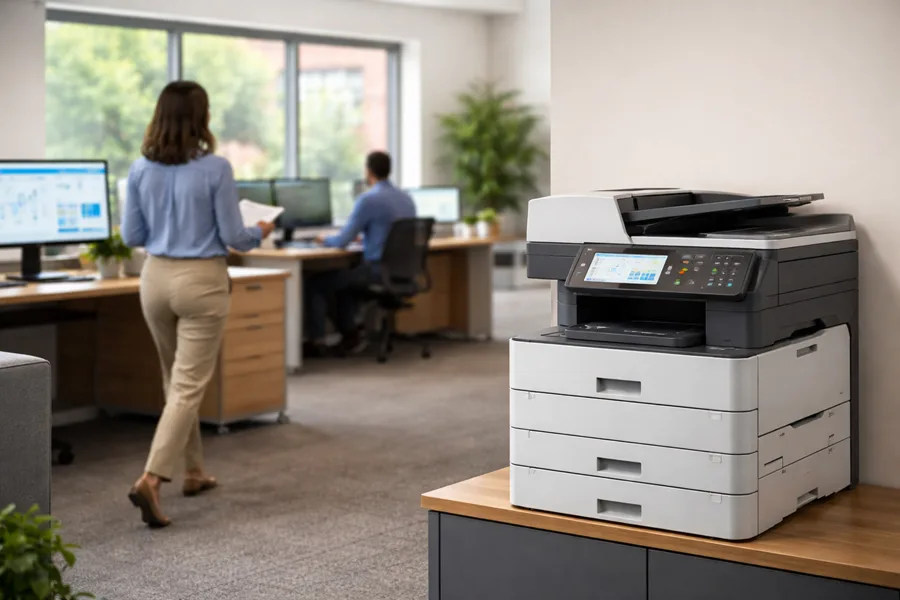
MPS is a coordinated set of practices and tools that inventory, manage, and optimize an organization’s printers, multifunction devices, supplies, maintenance, and print workflows to lower costs and improve security. We start by cataloging devices, applying usage policies, consolidating the fleet, automating supply replenishment, and using analytics to keep improving the environment. The result: less waste, more predictable spending, and fewer user interruptions. For Delaware County businesses, having a local partner matters — faster repairs and supply deliveries reduce downtime and keep daily operations moving. Below we break down the typical MPS components so you can see which actions drive value fastest.
What Is Included in Managed Print Services for Delaware County Companies?
Typical MPS engagements include a formal assessment, right-sizing the hardware, remote monitoring and management, supplies fulfillment, service and maintenance, user training, and reporting that tracks usage and cost. The assessment captures device types, monthly page volumes, color mix, and pain points, which informs consolidation and policy changes to eliminate redundant machines and improve efficiency. Continuous monitoring enables proactive maintenance and automatic supply ordering, cutting emergency service calls. Reporting gives visibility into cost-per-page, departmental usage, and remediation opportunities so you can govern and improve the environment over time. Below is a straightforward mapping of common MPS components to their purpose and expected results.
Different MPS components link to specific business outcomes you can measure.
This component view makes clear how MPS delivers measurable operational improvements and sets up the cost-reduction levers we cover next.
How Do Managed Print Services Reduce Costs and Improve Efficiency Locally?
MPS lowers cost by consolidating devices, centralizing supplies and service, enforcing print policies, and using transparent billing that links usage to spend. Consolidation often replaces old, inefficient desktop printers with multifunction devices (MFDs) that scan, copy, and duplex-print more economically, cutting energy and consumable costs. Policy changes — default duplex, black-and-white defaults, and user quotas — reduce waste and unnecessary color prints. Automated replenishment and remote diagnostics shrink emergency service visits and administrative work. Those improvements commonly produce industry savings in the 20–30% range; small businesses plagued by toner shortages or frequent breakdowns typically see the quickest payback as service incidents fall. Knowing how these mechanics work helps you evaluate pricing and vendor proposals objectively.
A data-driven study on MPS pricing and customer valuation shows how contracts and market dynamics shape service pricing and customer perception.
Empirical Study on Managed Print Services Pricing and Customer Valuation
This paper examines managed print services contracts using a proprietary dataset. On the customer side, printing demand was largely insensitive to price across the observed contracts; individual customers’ valuations mirrored the population trend. The study finds the population valuation falls as fleet size grows, suggesting larger firms have market power. On the provider side, given customer valuations, providers choose contracts that balance expected earnings with earnings variability — an indication of risk aversion. Across customers and industries, risk-adjusted earnings were similar, pointing to strong competition among providers.
Empirical study on managed print services pricing, J Ning, 2014
How Can Delaware County Businesses Save Money with Managed Print Services?
Lowering print spend combines tactical actions (right-sizing devices, enforcing defaults) with strategic contracting (transparent cost-per-page or all-inclusive plans). The two biggest levers are optimizing the physical fleet and choosing a pricing model that encourages lower usage and predictable monthly costs. Before you compare quotes, understand which cost drivers — monthly volume, color ratio, and device mix — will move your numbers and require baseline reporting to validate projected savings. Below we explain common pricing models and how to compare them, then list the fleet-optimization tactics that deliver the largest recurring savings.
What Are the Typical Pricing Models and Cost Factors for MPS in Pennsylvania?
Typical pricing models include cost-per-page (CPP), all-inclusive lease/subscription plans, and hybrid arrangements that combine a base lease with per-page charges. CPP ties maintenance and supplies to actual use and encourages conservation; all-inclusive simplifies budgeting with one predictable monthly fee covering service, parts, and consumables. Hybrid plans balance the two when volumes fluctuate. Key cost drivers to evaluate are monthly page volume, percentage of color prints, device count and age, and geographic spread that affects on-site service costs. When reviewing proposals, insist on transparent reporting and clear definitions of included supplies, guaranteed response times, and how overages are calculated.
Use this table to link cost factors to their effect on monthly spend.
Knowing these drivers helps you compare proposals fairly and negotiate terms that favor transparency and predictable budgeting. Associated Imaging Solutions offers flexible leasing and cost-per-page options that align with these principles while preserving upgrade flexibility and steady cash flow for Delaware County businesses.
How Does Print Fleet Optimization Lower Expenses for Delaware County Firms?
Fleet optimization reduces cost by right-sizing device counts, replacing inefficient single-function printers with MFDs, and centralizing network printing to eliminate redundant scanners and printers. Consolidation cuts fixed hardware costs and simplifies maintenance, while routing heavy volumes to efficient MFDs lowers cost-per-page. Enforcing policies — duplex on by default, black-and-white as the default, and limiting personal color prints — reduces consumables. For example, a mid-sized office that replaces three aging desktop printers with one networked MFD typically sees lower toner use, fewer service calls, and a 20–30% drop in total print spend within the first year. These optimization steps feed vendor pricing and ROI calculations, which is why reliable baseline data and ongoing analytics are essential for lasting savings.
What Security Features Do Managed Print Services Offer to Protect Delaware County Businesses?
MPS applies multiple device and document security layers to prevent unauthorized access, protect data in transit and at rest, and provide audit trails for compliance. Core controls include secure print release, user authentication, data encryption, secure firmware updates, and comprehensive logging and reporting. Combined, these features reduce accidental data exposure, limit documents left in output trays, and provide the records needed for regulatory review. The next section explains how secure print release works and how a local provider typically implements it as part of a managed program.
How Does Secure Print Release and User Authentication Work in AIS MPS?
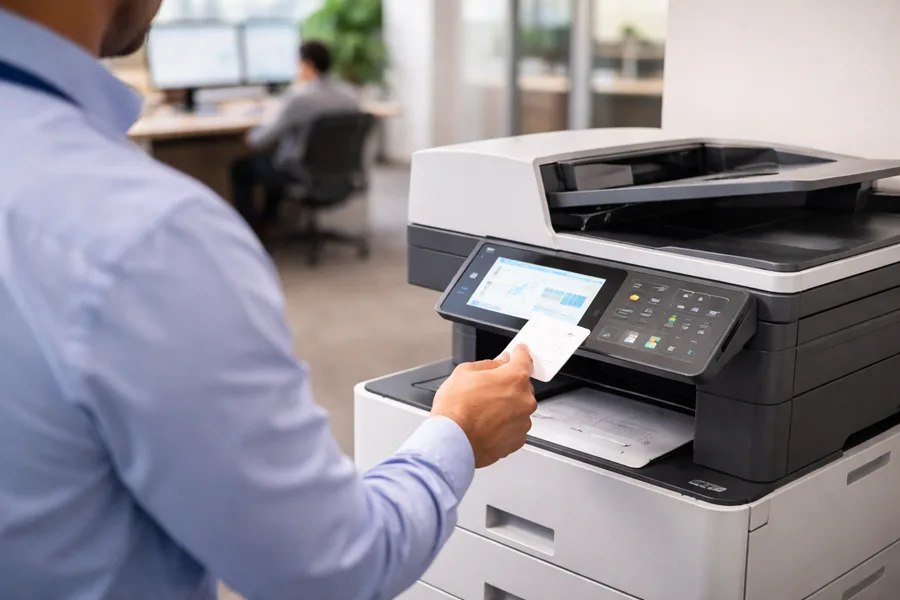
Secure print release holds jobs until an authenticated user is at the device, using badge, PIN, or mobile authentication — preventing sensitive documents from sitting unattended. Pull-print workflows route jobs to a secure queue; users authenticate at any networked MFD to release only the jobs they need, cutting misprints and protecting confidential information. Badge and mobile options integrate with existing identity systems to keep the user experience smooth while enforcing access controls. Associated Imaging Solutions includes industry-standard secure release and authentication as part of its MPS offerings, pairing robust controls with local service responsiveness so security features stay operational. This approach supports compliance frameworks such as HIPAA and similar standards.
A deliberate print security strategy is essential to protect an organization’s printer network from evolving threats.
Securing Printer Networks with Print Service Strategies
ABSTRACT: Harville, Archie D. Colorado Technical University — ProQuest Dissertations & Theses, 2019.
This research explores the strategies required to secure an organization’s printer network, highlighting policies, controls, and operational practices that reduce exposure and improve incident response.
What Compliance and Data Protection Measures Are Included in MPS?
MPS compliance measures typically include encrypted data transmission and storage, secure firmware management, role-based access controls, and detailed audit logging to demonstrate chain-of-custody for printed documents. These controls align with regulatory needs — for example, in healthcare — by ensuring sensitive documents are released only to authorized users and by capturing device logs that show who printed and accessed documents. Secure device decommissioning and certified data-wipe procedures prevent residual data exposure when equipment is retired. Below is a practical mapping of key security features to how they work and the compliance benefits they deliver.
Security features map to compliance and operational benefits as follows.
These controls form a defensible print-security posture and give organizations the documentation they need to respond to audits or investigations.
Why Choose Associated Imaging Solutions for Managed Print Services in Delaware County, PA?
Associated Imaging Solutions delivers regional MPS with a focus on dependable service, flexible financing, and technology that meets modern security and sustainability expectations. Local expertise combined with established processes enables faster field response, easy upgrade paths, and vendor-agnostic device options that suit varied operational needs. Many Delaware County organizations benefit from a regional partner who understands service territories, procurement rhythms, and the need for quick repairs to minimize downtime. The sections that follow explain how our experience and service model translate to practical advantages, plus the leasing and eco-friendly options we commonly offer.
How Does AIS’s 40 Years of Experience Benefit Delaware County Businesses?
Forty years in the business gives us mature service processes, reliable vendor relationships, and institutional knowledge of device lifecycles that reduce risk and friction. That tenure supports predictable service delivery — proven repair workflows, parts availability, and field routines that keep clients operational. Experienced providers also refine reporting and optimization methods, so we identify savings faster through analytics and tailored policies. For Delaware County organizations, that experience means smoother onboarding, dependable maintenance, and a local partner who recommends proven device and policy choices rather than experimental approaches.
What Flexible Leasing and Eco-Friendly Options Does AIS Provide?
Flexible leasing and subscription plans let businesses avoid large upfront costs while preserving the ability to upgrade to newer MFDs as needs change. Bundled options that include service, supplies, and maintenance create predictable monthly payments and simplify budgeting for refresh cycles. Eco-friendly choices include energy-efficient devices, toner recycling programs, and consolidation strategies that cut paper and power use — practical measures that lower environmental impact and operating costs. These financial and sustainability options help organizations balance fiscal responsibility with environmental stewardship without complicated procurement hurdles.
How Does Managed Print Services Compare to In-House Printing for Delaware County Companies?
Choosing MPS versus in-house printing means weighing predictable costs, centralized control, and stronger security against owning hardware directly and maintaining perceived control. MPS centralizes management, simplifies budgeting, and brings focused expertise on security and analytics; in-house keeps direct device control but often hides total costs in IT and facilities workloads. If administrative burden, security gaps, or rising costs are problems, MPS typically delivers net benefits. Below is a concise pros-and-cons list to help you decide which approach matches your priorities.
Here’s a concise pros and cons breakdown to guide your decision.
- Pros of Managed Print Services: predictable costs, centralized reporting and management, stronger security controls, scalable for growth.
- Cons of Managed Print Services: initial onboarding and change management as staff adopt new policies and workflows.
- When in-house can make sense: very low-volume sites with minimal print needs or organizations that require full hardware control despite higher operational overhead.
What Are the Pros and Cons of Managed Print Services vs. In-House Printing?
Match the strengths of each model to your organization’s needs. MPS offers predictable budgeting and centralized oversight, easing the burden on IT and facilities while improving compliance through standardized controls. In-house printing gives immediate control of hardware but often masks real costs — maintenance, supplies, and admin time — which raises total ownership. The best choice depends on scale, regulatory needs, and tolerance for fragmented device management; organizations expecting growth, mergers, or heightened compliance demands usually see greater long-term value from MPS. The next section lists clear operational signals that indicate it’s time to switch.
When Should Delaware County Businesses Consider Switching to MPS?
Consider MPS when printing costs rise without clear visibility, when security or compliance gaps appear, or when IT and office staff spend too much time managing printers instead of strategic work. Specific triggers include frequent service outages, unexplained toner or supply consumption, trouble enforcing document controls, and print costs taking a notable share of the office budget. Rapid growth, mergers, or regulatory changes that increase document-handling requirements are also strong catalysts. Track these signals and quantify baseline page volumes and cost centers to make a well-documented ROI case for an MPS rollout.
How Do Delaware County Businesses Implement Managed Print Services with AIS?
Implementing MPS is a multi-step process that starts with a data-driven assessment and moves through planning, deployment, training, and continuous optimization to lock in savings and security. A structured rollout reduces disruption and helps teams adopt new policies. When you work with a regional provider, expect a collaborative approach combining on-site assessment with remote monitoring, transparent pricing, and regular reporting. Below are the typical stages of a managed implementation and how to request an assessment or quote.
What Are the Step-by-Step Stages to Start Managed Print Services?
- Inventory & Assessment: Record devices, volumes, color mix, and pain points to set a baseline for savings.
- Proposal & Right-Sizing: Review a recommended fleet configuration, policy changes, and projected costs for approval.
- Deployment & Training: Install devices, configure secure printing and authentication, and train staff on new workflows.
- Ongoing Management & Reporting: Monitor devices, automate supplies and maintenance, and deliver periodic optimization reports.
Each stage targets measurable outcomes — fewer devices, lower cost-per-page, and fewer service incidents. Timelines typically run a few weeks for assessment and proposal and a month or two for phased deployment, depending on scale. These steps make results predictable and easy to track with baseline and ongoing analytics.
How Can Businesses Request a Free Assessment or Quote from AIS?
Delaware County organizations can request a free evaluation or customized quote through Associated Imaging Solutions’ public contact channels at request a free evaluation. To speed the process, have basic details ready: number and types of devices, estimated monthly page volumes, key compliance requirements, and recent pain points like frequent downtime or supply shortages. The free assessment typically includes an on-site or remote inventory, usage analysis, and a right-sizing proposal with flexible leasing and pricing options. Requesting an assessment is the practical first step to quantify potential savings, strengthen security, and move to a more predictable printing environment.
Frequently Asked Questions
What types of businesses can benefit from Managed Print Services?
MPS helps a broad range of organizations — from small offices to large enterprises. Sectors with heavy document needs and regulatory requirements, such as healthcare, education, legal, and finance, typically see big gains in security and efficiency. But any business that wants to cut printing costs, reduce administrative overhead, and improve uptime can benefit from MPS. In short: if printing is a recurring cost or pain point, MPS is worth evaluating.
How can businesses measure the success of their Managed Print Services implementation?
Measure success with clear KPIs and baseline comparisons. Track cost savings, print-volume reductions, cost-per-page, downtime incidents, supply usage, and user satisfaction before and after implementation. Regular reports from your MPS provider should make it easy to see trends and validate savings. Use these metrics to identify further optimization opportunities and to ensure the program continues to meet business goals.
What are the potential challenges when transitioning to Managed Print Services?
Common challenges include staff resistance to new workflows, the need for training, and short-term disruptions during rollout. Accurately capturing the current environment can also be tricky but is critical for right-sizing. To reduce friction, engage stakeholders early, provide practical training, and maintain open communication with your MPS provider throughout the transition.
How does MPS support sustainability initiatives for businesses?
MPS supports sustainability by promoting paper reduction, energy-efficient devices, and recycling programs for toner and consumables. Policies like default duplex printing and digitizing workflows reduce waste, and consolidating hardware lowers energy use. These steps not only shrink your carbon footprint but also cut costs — aligning environmental goals with fiscal benefits.
What role does user training play in the success of Managed Print Services?
User training is essential. Proper onboarding ensures employees understand secure print release, authentication, and new workflows, which reduces errors and increases adoption. Ongoing training and support from your provider help maintain compliance and keep the program delivering value over time.
Can Managed Print Services integrate with existing IT infrastructure?
Yes. MPS providers assess your current IT environment to ensure compatibility with network settings and security policies. Integrations typically enable seamless monitoring, management, and reporting without major changes to your infrastructure, while adding analytics that give better visibility into printing operations.
Related Posts
— Managed Print Services in Montgomery County, PA
— New & Used Copier Sales in Philadelphia