

How to Make Copies Efficiently: A Step-by-Step Printer User Guide (2026 Guide)

May 26, 2026
 0 views
 0 comments
How to Make Copies Efficiently: A Step-by-Step Printer User Guide (2026 Guide)
Save time, ink, and toner with smart photocopy techniques for multifunction and single-function office printers.
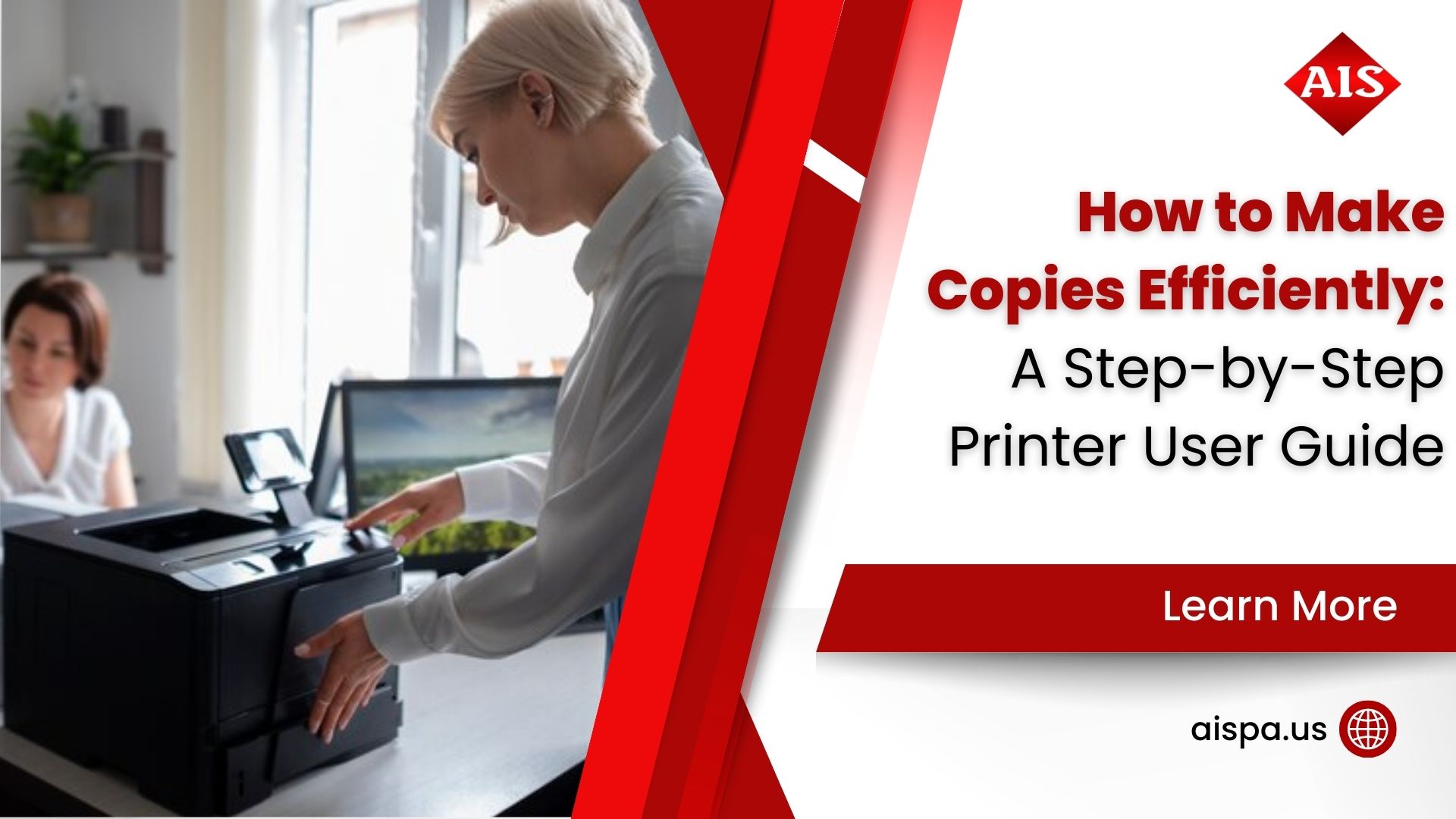
To make copies efficiently, place your document face down on the scanner glass or load it into the automatic document feeder (ADF). Press the Copy button, set the number of copies, paper size, and color or black & white, then press Start. For multi-page jobs, use the ADF and enable duplex copying to halve your paper use.
Office Copying in 2026: Faster, Smarter, and Cheaper
Making copies sounds simple. But the average office still wastes nearly a quarter of every printed page, and that waste hits the budget every month. According to widely cited industry research, U.S. office workers print around 10,000 pages per employee per year, and 17 to 23 percent of those pages never get used. So a small change in how your team makes copies can free up real money.
Modern copiers and multifunction printers are built to do more than spit out paper. They scan, route documents to email, store presets for repeat jobs, and copy in duplex without flipping a single page. At Associated Imaging Solutions, our Pennsylvania clients ask us about copying workflows more than almost any other topic. So we built this guide to answer the basics and the advanced tricks in one place.
Whether your office uses a desktop all-in-one or a floor-standing Sharp MFP, the same core habits apply. And once your team picks them up, productivity rises while supply costs drop.
Pages printed per office employee per year in the U.S. (industry estimate, please verify with your own audit)
Making Copies on a Multifunction Printer: 7 Easy Steps
A multifunction printer (MFP) is a single device that prints, copies, scans, and often faxes. Most modern offices in Philadelphia and across Bucks County use one or several MFPs from brands like Sharp, Ricoh, or HP. The copying process is the same on almost every model.
- Step 1: Power on and warm up. Check that the device is on, paper trays are loaded, and toner is sufficient. A cold start can take a minute or two on enterprise machines.
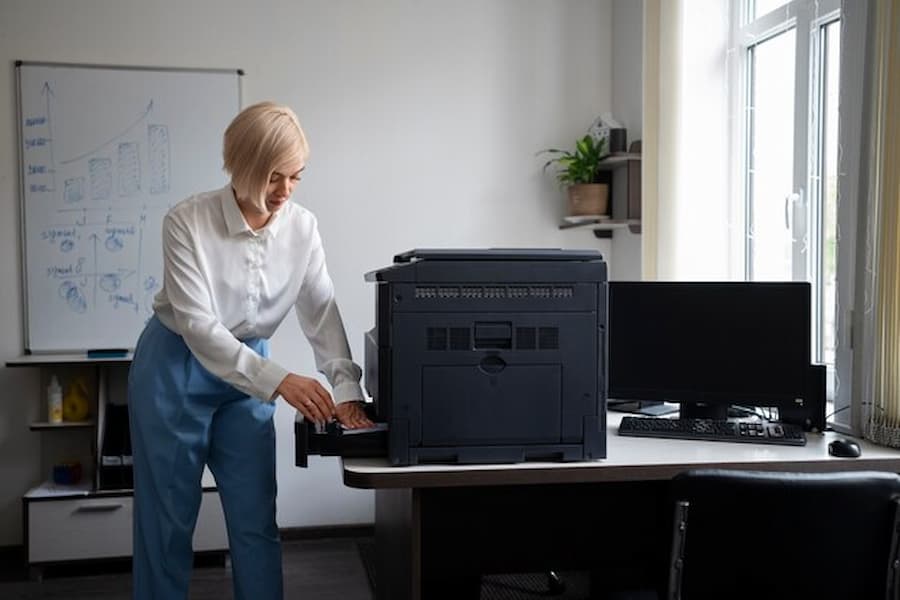
- Step 2: Position the document. Lift the lid and place the original face down on the scanner glass, aligned to the corner arrow. Or load up to 100 sheets in the ADF if you have a multi-page job.
- Step 3: Tap the Copy icon. On the touchscreen, select Copy from the home menu. The default mode is usually black and white at 100 percent scale.
- Step 4: Set your job options. Choose color or monochrome, the paper tray, copy quantity, and resolution. Most office jobs run fine at 600 dpi.
- Step 5: Enable duplex if needed. Look for the 2-sided icon to copy both sides of a sheet onto one page, or one page onto both sides. So you cut paper use in half on long documents.
- Step 6: Press Start. The machine will scan the original (or feed each sheet through the ADF) and produce your copies. Quick jobs finish in seconds.
- Step 7: Verify the test copy. Always check the first sheet for skew, faint print, or missing edges before running large batches. A 30-second sanity check saves a ream of waste.
How to Copy on a Single-Function Printer
Some smaller offices still run a printer plus a separate copier or scanner. These single-function devices have fewer buttons, but the rhythm of the job is similar.
- Place the original face down on the platen glass and close the lid gently.
- Press the Copy hard button on the front panel. There may be a small LCD screen for adjusting count and size.
- Choose the number of copies with the numeric keypad or the up arrow.
- Hit the green Start button. So the device scans once and outputs your copies.
- If the copier supports collation, it will sort multi-page sets automatically.
And if you have a desktop inkjet at home or in a small office, the same steps apply with one caveat: inkjet copies cost two to four times more per page than laser copies. So heavy copying volume is a strong signal that you should consider an upgrade.
Copy Quality Tips for Professional Results
Want copies that look as crisp as the original? A few small adjustments make a big difference, especially on contracts, brochures, and image-heavy documents.
Resolution. Bump from 300 dpi to 600 dpi for photos or fine detail. Anything higher is rarely visible at normal reading distance.
Density. Increase darkness one notch for faded originals; decrease one notch for receipts or thermal paper that bleeds.
Color mode. Use grayscale instead of full color when you only need shades of black. Color toner can cost two to three times more per page.
Reduction and enlargement. Most MFPs scale from 25 percent up to 400 percent. Enlarge for poster previews; reduce when you want to fit two pages on one sheet.
Sort, group, and staple. If your copier has a finisher, multi-set jobs get sorted, stapled, or hole-punched automatically. So a 50-page handout for 20 attendees comes out ready to distribute.
Average print cost reduction reported by businesses on managed print programs (figure from industry surveys; results vary by office)
Multifunction vs. Single-Function: Which Suits Your Office?
Choosing between a multifunction printer and a single-function setup depends on your team size, copy volume, and how often you scan or send documents. Here is a quick comparison from the field.
| Factor | Multifunction Printer (MFP) | Single-Function Devices |
|---|---|---|
| Footprint | One unit; saves floor space | Two or three units; takes more room |
| Upfront Cost | $1,500 to $9,000 depending on speed | $300 to $2,500 per device |
| Cost Per Page (Mono) | $0.008 to $0.015 | $0.015 to $0.04 |
| Cost Per Page (Color) | $0.045 to $0.08 | $0.07 to $0.18 |
| Duplex Copying | Standard on most models | Often manual only |
| Scan to Email or Cloud | Built-in | Rarely available |
| Ideal Office Size | 5 to 100+ users | 1 to 4 users |
| Service Calls | One device, one contract | Multiple vendors possible |
For most Philadelphia and Bucks County offices we serve, a leased MFP wins on total cost of ownership. The bigger devices print faster, jam less often, and consolidate scanning, copying, and printing into one bill. If you are unsure, our team can run a free print assessment to compare your current setup against a Sharp or Ricoh MFP.
What Does It Really Cost to Make Copies?
Cost per copy is one of the most misunderstood line items in office budgets. Hardware is only a slice. So is paper. The real cost includes toner, drum kits, electricity, service calls, and the time your staff spends fixing jams.
According to industry estimates, the all-in cost of a black and white copy on a leased office MFP runs about 1 cent. Color copies typically land between 6 and 9 cents per page. Multiply that by 10,000 pages per employee per year and a 25-person office is spending well above $50,000 annually on print, much of it hidden.
For a deeper dive, read our guide on how much a copy machine costs to lease or buy. We also break down ink and toner economics in our explainer on how many pages an ink cartridge prints. Both posts are worth a quick read before signing a new copier contract.
And remember: a managed print services program can shave 30 to 50 percent off your total print spend. The savings come from right-sizing the fleet, automating supply orders, and catching wasteful behaviors before they pile up. For more detail, the Association for Intelligent Information Management publishes thoughtful research on the topic.
Five Copying Habits That Save Time and Money
- Default to duplex. Set the device default to 2-sided printing. Most staff never change a default; you save thousands of sheets a year with one click.
- Use job presets. Sharp and Ricoh MFPs let you save copy settings as a one-touch button. So your monthly board packet can be a single tap.
- Print preview before copying. A 2-second preview prevents a 200-page mistake. Always glance at it.
- Authenticate at the device. Card or PIN release holds the job until the user is standing at the machine. Forgotten print jobs drop to nearly zero.
- Audit color use. Lock color access to specific roles. Most internal documents work in black and white; reserve color for client-facing material.
If your team needs help configuring any of these, we can set the defaults on every device in your office during a single onsite visit. And we include this kind of tuning in every managed service contract.
Common Copying Problems and Quick Fixes
Even the best copier hits a snag sometimes. So here are the most frequent issues and what to try first.
- Streaks or lines on copies. Clean the scanner glass with a soft microfiber cloth and a drop of isopropyl alcohol. A speck of dust shows up as a line across every copy.
- Faded text. Increase copy density one notch. If the issue stays, your toner cartridge is likely low.
- Paper jams in the ADF. Fan the stack before loading; align edges; check that you are not feeding more than the rated capacity. For a deeper guide, see our post on why your printer keeps jamming.
- Skewed copies. Square the original against the corner guide on the platen or adjust the ADF guides.
- Wrong size output. Confirm the paper tray setting matches the loaded paper. Letter, legal, and tabloid jobs use different trays.
- Slow first copy. Most MFPs warm up after idle. Quiet mode and sleep settings can extend warm-up time.
Energy and Paper: Copying Sustainably
Sustainability is no longer optional. The EPA Energy Star program certifies copiers and MFPs that use significantly less electricity than baseline models, especially during idle periods. So choosing an Energy Star device pays back in two ways: lower utility bills and a smaller carbon footprint.
Paper itself is the bigger lever. Defaulting to duplex copying cuts paper use almost in half. Recycled-content paper at 30 percent post-consumer fiber works perfectly in modern copiers, and it costs about the same as virgin stock. So the switch is easy.
Toner cartridges also have a return path. Sharp, Ricoh, and most major brands run free recycling programs for empty cartridges. Our service techs collect used cartridges at no charge during regular Pennsylvania service routes.
Modern Copying Features You May Not Be Using
Today’s MFPs include features that were premium add-ons just five years ago. So if your office runs a copier from 2019 or earlier, you are likely paying for a worse experience than a current Sharp or Ricoh model would provide.
Single-pass duplex scanning. Two scanner heads capture both sides of a sheet in one pass through the ADF. So a 100-page double-sided original scans in under a minute on a 75 ppm machine.
Optical character recognition (OCR). Scanned documents become searchable PDFs with text you can copy, paste, and index. So your accounting team can find an invoice by vendor name in seconds rather than rifling through folders.
Mobile printing and copying. Apps from Sharp, Ricoh, and others let staff send a job from their phone or tablet, then release it at any device in the office. Great for hybrid teams.
Cloud connectors. Most modern MFPs ship with Microsoft 365, Google Drive, Dropbox, and Box connectors built in. So a scan can land in the right SharePoint folder with one tap on the panel.
Secure print release. A PIN, card swipe, or smartphone tap holds the job until the right person stands at the device. Sensitive HR or legal documents never sit forgotten in the output tray.
Voice and AI assistants. A few high-end models add voice prompts to walk users through complex jobs. So a new hire can run a complicated copy job without three weeks of training.
If your current copier is missing two or three of these capabilities, an upgrade or refresh likely pays for itself within the lease term. Our team at Associated Imaging Solutions can run a no-obligation feature audit to spot gaps. For tips on relocating equipment during an office change, see our short guide on how to safely move a copier or printer.
Training Your Staff to Copy Efficiently
The best copier is only as useful as the people running it. So a small investment in training pays back many times over in reduced waste and fewer service calls.
Most reputable copier dealers, including our team, include onsite training in every lease. A 30-minute walkthrough at delivery is enough for daily users. Power users (finance, HR, marketing) benefit from a deeper session covering job presets, scan workflows, and address books.
And once trained, post a one-page cheat sheet near the device. Common items to include: how to clear a paper jam, how to add paper, where to find toner, and who to call for service. Our PA service phone number is right on every leased machine.
If a key employee leaves and your office loses the copier expert, no problem. Refresher training is a single email or phone call away. So you never lose institutional knowledge to staff turnover.
Should You Buy or Lease Your Copier?
Buying a copier outright works when you have the cash, low copy volume, and a long planning horizon. But for most growing offices, leasing wins on cash flow and flexibility. A typical 36 to 60 month lease keeps you on current hardware, bundles service and supplies, and converts a capital purchase into a predictable monthly operating expense.
Leasing also matters for tax planning. Lease payments are usually fully deductible as a business expense in the year paid. Buying spreads the deduction across years through depreciation. So your accountant may prefer the lease path for cleaner books.
If you serve clients in Philadelphia, Bucks County, or Montgomery County, our local team handles every Pennsylvania copier lease from quote to install. So you talk to one person, not three vendors. Get a quote if you want a side-by-side cost comparison for your office.
How Associated Imaging Solutions Helps Pennsylvania Offices Copy Smarter
Free Print Audit
We measure your current pages, devices, and supplies; then we model savings before you commit.
Right-Sized Fleet
We match Sharp or Ricoh MFPs to your real volume. So you do not pay for capacity you never use.
Onsite Setup
Delivery, installation, and staff training in Philadelphia and surrounding PA counties.
Managed Supplies
Toner and parts ship automatically; nobody runs out mid-job.
Local Service
Four-hour response on most service calls within our PA territory.
Document Workflow
Scan-to-email, scan-to-cloud, and secure print release configured for your team.
Estimated annual office print spend per employee, U.S. averages (verify against your own audit)
Frequently Asked Questions
1. What is the fastest way to make copies on an office printer?
Load multiple sheets in the automatic document feeder, choose your settings once, and press Start. So a 20-page job can finish in under a minute on a 30 ppm MFP.
2. Can I make double-sided copies from a single-sided original?
Yes. Most multifunction printers offer a 1-sided to 2-sided option in the copy menu. Pick it and the device will pair pages automatically.
3. How do I copy an ID card on both sides onto one page?
Use the ID Card Copy feature. Place the front of the card on the glass, scan it, then flip the card and scan the back. Both images appear on one sheet.
4. Why are my copies coming out blurry or streaked?
The scanner glass or the ADF rollers may be dirty. Clean the glass with a soft cloth and isopropyl alcohol. If issues continue, the drum unit may be due for replacement.
5. How can I reduce my office copy costs?
Default to duplex, lock color access to specific roles, and use authenticated release at the device. A managed print services program can save 30 to 50 percent on top of those habits.
6. What is the difference between copy and scan on a multifunction printer?
Copy makes a paper duplicate of your original. Scan converts the original to a digital file, usually a PDF or JPEG, then sends it to email, a folder, or the cloud.
7. How long does a copier last?
A commercial leased copier typically lasts five to seven years with regular service. Lease cycles are usually 36, 48, or 60 months, which keeps your hardware current.
8. Do I need a separate scanner if I already have a copier?
Probably not. Almost every modern MFP can scan to email, scan to a network folder, and scan to a cloud drive like SharePoint or Google Drive.
9. Can I copy a passport or other thick document?
Yes. Place the open passport face down on the platen glass; do not use the ADF. Apply gentle pressure on the lid to flatten the page if needed.
10. Where can I lease a commercial copier in Pennsylvania?
Associated Imaging Solutions serves Philadelphia, Bucks County, Montgomery County, and the wider PA region. So you can request a free assessment and pricing through our quote page.
11. Are color copies always more expensive than black and white?
Yes, and by a wide margin. Color pages run roughly four to nine times the cost of black and white due to four toner cartridges and slower per-page yields.
12. What is the best paper weight for copying?
Standard 20 pound or 75 gsm paper works for daily copies. Use 28 pound or 105 gsm for brochures and presentation handouts.
Ready to Copy Smarter?
Associated Imaging Solutions has been “providing solutions to make businesses run more productively, more reliably, and more efficiently” since 1999.
Serving Philadelphia, Bucks County, Montgomery County, and Pennsylvania.
Call (215) 999-8445
Related Posts
— What Is Printer Pooling? Understanding the Basics and Benefits
— The Lifespan of Printers: How Long Do Printers Last